
Selection Criteria
- VERIFIED TRAINING • Certified, documented, and independently verifiable.
- PRACTICAL EXPERIENCE • Years spent inside real homes.
- TRANSPARENT PROCESS • Scope, fees, deliverables stated upfront.
- REALISTIC REMEDIES • Rearrangement first, demolition almost never.
- CLIENT FEEDBACK • References you can actually check.
Beyond Belief, Into Clarity
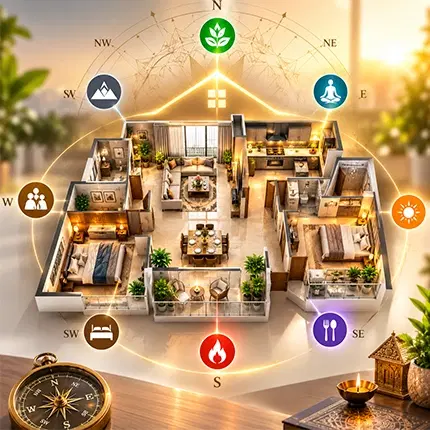
Vastu Shastra is, at its base, a planning framework. It reads a building through direction and zone, and asks how light enters, how air moves, where the family cooks, sleeps and studies, and whether each room's purpose sits comfortably in the part of the plot it occupies. Those are spatial questions before they are spiritual ones. A well-oriented bedroom is quieter and cooler; a thoughtfully placed kitchen is safer to work in; a cluttered north-east corner is simply a corner nobody enjoys walking past.
A proficient Vastu consultant is the person who translates that traditional framework into decisions you can act on this month, inside the home you actually own, within the money you have set aside.
The tests you would apply to any home or wellness professional apply here too. Ask about qualifications, where the training came from, and how many years have been spent in active practice rather than theory. Ask them to describe their process end to end, including what the fee covers and what it does not. Then listen to the shape of the advice. Sound consultants explain their reasoning and leave room for your judgement. They do not build urgency out of fear, and they do not push costly purchases as the first step.
An honest note: Vastu is a traditional discipline built on long observation of space, light and orientation. It is not laboratory science, and no responsible consultant will present it as such. What a good consultation offers is a considered reading of your home and practical suggestions you are free to weigh.
The Problem
Anyone can call themselves a Vastu consultant, and there is no obvious way for a first-time client to tell the difference.
Many people quietly worry they will be told to break a wall, shift a kitchen or buy something expensive before anything else is attempted.
Very few clients know what a proper consultation should actually include, so they cannot tell whether they received one.
What Matters Most
A good consultant explains their methodology, their experience and the limits of what Vastu can address, without being asked twice.
Recommendations should be practical, safe, and matched to your budget, your timeline and the constraints of your building.
Transparent pricing, a written scope of work and honest communication are not extras. They are the baseline.
Who Can Consider This
First-time buyers and homeowners planning a new build or a renovation, where early guidance costs far less than late corrections.
Apartment residents working with a fixed builder layout and limited scope for structural change.
Business owners and families who want traditional Vastu guidance alongside modern architectural or interior planning.
Understanding Consultant Credentials
Credentials are the easiest thing to ask about and the most commonly skipped. Ask where the formal training came from, whether a recognised institution or a long apprenticeship under an established mentor, and request to see the certification. Ask how many years they have been practising actively and roughly how many homes they have assessed, since volume across varied layouts builds judgement that reading alone does not.
Property type matters more than people expect. Someone who works mainly on independent houses may read a 2BHK builder flat differently from a consultant who handles apartments daily. Commercial spaces are a separate discipline again. Ask whether they have handled properties like yours.
Where applicable, membership of a professional body or a directory listing adds verification. So does a willingness to share references, a sample report format or case studies on request.
Credentials alone settle little. A certificate confirms training; it says nothing about whether the person will explain their reasoning or respect your budget. Practical experience and ethical conduct carry equal weight, and both surface in the first conversation if you listen for them.
A Transparent Consultation Process
You should be able to picture the whole engagement before paying for it. A clear Vastu consultation process usually moves through five stages.
Pre-consultation discussion. Why you are seeking guidance, what has been troubling you, and what you can realistically change. Goals and constraints belong at the start.
Document review. Floor plans, compass directions, photographs and the current condition of the property. For an online consultation this material does most of the work, so accuracy matters.
Assessment. An on-site visit or a detailed remote review, covering directional zones, room allocation, natural light, ventilation, storage and how the household uses each space on an ordinary day.
Recommendations. A written report, or clearly explained suggestions, with priorities marked. You should know which two or three changes matter most and which are optional.
Follow-up. Reasonable support while you implement, within an agreed scope.
Fees, deliverables, revisions, travel charges and additional site visits should be stated in writing before the engagement begins. A consultant comfortable putting scope and pricing on paper is usually comfortable being held to it.
Practical, Non-Destructive Remedies
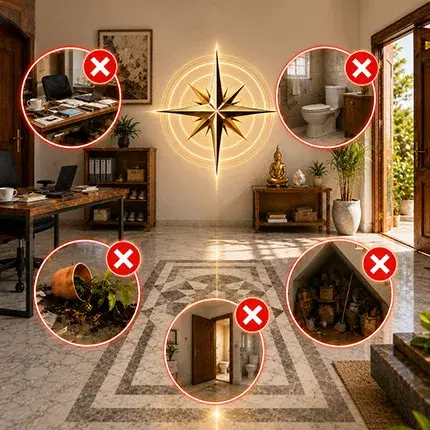
The philosophy behind the remedies tells you a lot about the practitioner. The first line of correction should be arrangement: repositioning a bed, turning a study table, shifting heavy storage out of a zone that should stay light, changing which room is used for what. These cost nothing and can be reversed if they do not suit you.
Next come minor adjustments. A lighter paint shade, better lighting where a room stays dim, reorganised storage, curtains that let morning light in, a cleared corner that had become a dumping ground.
Structural change belongs last, and only where a defect genuinely cannot be worked around. Even then, weigh it against cost, feasibility and building rules. Any advice that conflicts with electrical safety, gas line placement, ventilation or society bye-laws is not advice worth following.
Be cautious with narratives built on fear, particularly when they arrive attached to a product list. A responsible consultant will say clearly which suggestions are traditional and optional rather than presenting them as mandatory purchases.
No consultant can guarantee wealth, marriage, a cure, a child or a promotion. Anyone who does is selling something other than Vastu.
Red Flags to Notice
Treat these as caution signals, not automatic disqualifications. One may have an explanation. Three together rarely do.
- Cash-only dealing, with no invoice or GST documentation where it applies
- Vague pricing at the start, followed by charges that appear midway through
- Pressure to buy expensive remedies, products or a series of paid follow-ups
- Guarantees of specific outcomes, fixed timelines or life results
- Reluctance to share credentials, references or a sample report format
- Suggestions that conflict with electrical, gas, structural or safety norms
- Standard remedies offered before your floor plan has been properly examined
Green Flags to Look For
- A clear account of training, years in practice and the property types handled
- A stated fee structure and a written scope of work before payment
- Willingness to answer questions patiently, and no discomfort if you seek a second opinion
- Recommendations that begin with safety, practicality and your budget
- Balanced language, free of guilt, fear or exaggerated claims
- Availability for reasonable follow-up within agreed terms
- Client feedback and references that can be verified on request
- Honesty about the limits of Vastu, and about questions that belong to an architect or doctor
Your Role in the Process
A consultation works both ways. The quality of what you receive depends partly on what you provide.
Share an accurate floor plan, correct compass directions and clear photographs. A rough hand-drawn layout with true directions beats a polished plan with guessed ones.
Be open about constraints. Budget, rental restrictions, society approvals, a wall that cannot be touched. Guidance built around real limits gets implemented; guidance built around ideal conditions sits in a folder.
Implement thoughtfully and give the changes time before deciding what to do next.
Keep professional advice where it belongs. Structural questions go to a qualified engineer or architect, health concerns to a doctor, legal and financial matters to the relevant professionals. Vastu guidance works alongside those, not in place of them.
FAQ
How to Choose a Proficient Vastu Consultant - People also ask
Look for documented training from a recognised institution or a sustained apprenticeship under an established practitioner, plus active consulting experience. Ask to see the certification. Qualifications confirm the grounding; how clearly the consultant explains their method tells you how they will work with your home.
There is no fixed number, though several years of continuous practice across varied layouts builds judgement that study alone does not. Relevance matters just as much: someone who has assessed hundreds of apartments will read your builder flat faster than a generalist with a longer résumé.
Usually the assessment, the report or documented recommendations, and a defined period of follow-up. Clarify in writing whether site visits, travel, revisions and extra rooms are covered. Compare consultants on scope rather than price alone, since the cheapest quote often excludes the report.
Online consultations work well when the floor plan, compass readings and photographs are accurate, and they are now standard for clients outside the consultant's city. On-site visits allow finer observation of light and air movement. The choice depends on distance, complexity and budget.
Request the certificate, check for a professional body or directory listing, and ask for two references you may contact. Read reviews across more than one platform, looking for specifics about the process rather than only praise about outcomes.
Ask what the process involves, what the fee covers, what the deliverable looks like, how long follow-up lasts, and whether they have worked with properties like yours. Then ask what they would do if a recommendation is not feasible for you. That last answer is revealing.
Usually not. Most corrections in a lived-in home come down to placement, orientation, decluttering, lighting and colour. Traditional items may be suggested, and it is fair to ask whether one is essential or optional, and whether an arrangement-based alternative exists.
No, and a guarantee should make you more cautious rather than more confident. Vastu is a traditional discipline, not a predictive one. A consultant can explain what a change is intended to support and what clients commonly report, but life outcomes involve too many factors to promise.
A discussion of your concerns, a review of the floor plan and directions, an on-site or detailed online assessment of zones, light, ventilation and room use, then prioritised recommendations you can implement in stages, with support while you carry them out.
Notice the balance of the conversation. If most of it describes what will go wrong and little explains why a change helps, that is a signal. Urgency, warnings about family or finances, and an early list of items to purchase form a pattern worth stepping back from.
Related Posts
















Ready to Transform Your Space?
Get expert Vastu guidance from Seema Bhatia. Start your journey to harmony and prosperity today.