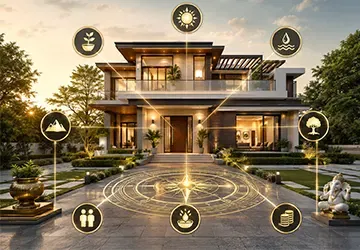
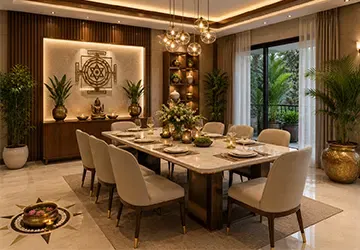
Vastu Shastra is an ancient Indian architectural science. The word 'Vastu' means dwelling, and 'Shastra' means organised knowledge or science. Together, they describe a system that studies how a building's design, orientation, and layout interact with natural forces and how that interaction shapes the experience of the people living inside.
It is not about superstition or ritual. The underlying logic is spatial and elemental. Vastu identifies five core energies that are always present in any environment:
- Prithvi (Earth) - physical stability, foundation, health of the body
- Jal (Water) - flow, emotions, relationships, financial movement
- Agni (Fire) - digestion, income, ambition, decision-making capacity
- Vayu (Air) - mental clarity, communication, movement of ideas
- Akasha (Space) - consciousness, expansion, openness in life
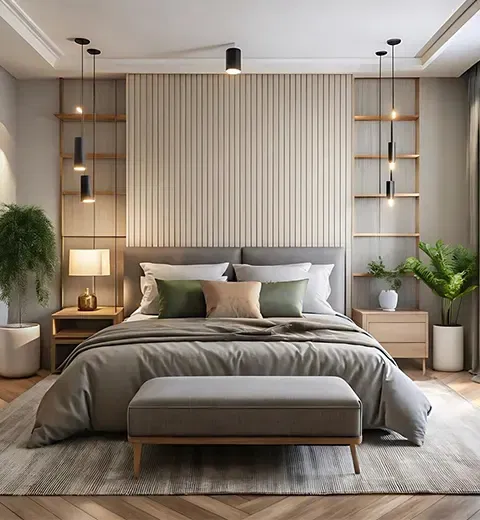
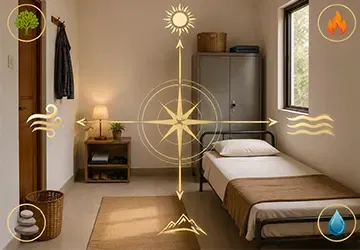
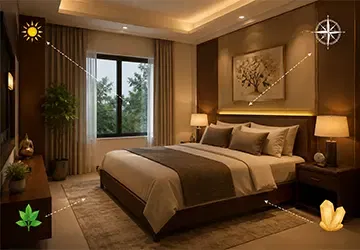
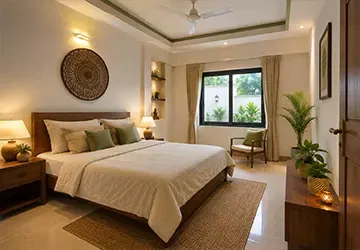
Each zone of a home the entrance, the kitchen, the Vastu for Bedroom, the study, the bathroom, corresponds to one or more of these elements. When a zone's use aligns with its elemental nature and directional position, energy moves well. When it doesn't, the effects accumulate quietly, but consistently.
Residential Vastu specifically applies these principles to homes: flats, apartments, independent houses, and villas. It covers not just construction-stage planning, but also corrections for existing homes because most people encounter Vastu as a concept after they are already living somewhere.
How Directions Work in Vastu - The Foundation of Every Assessment
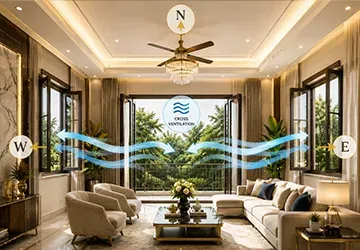
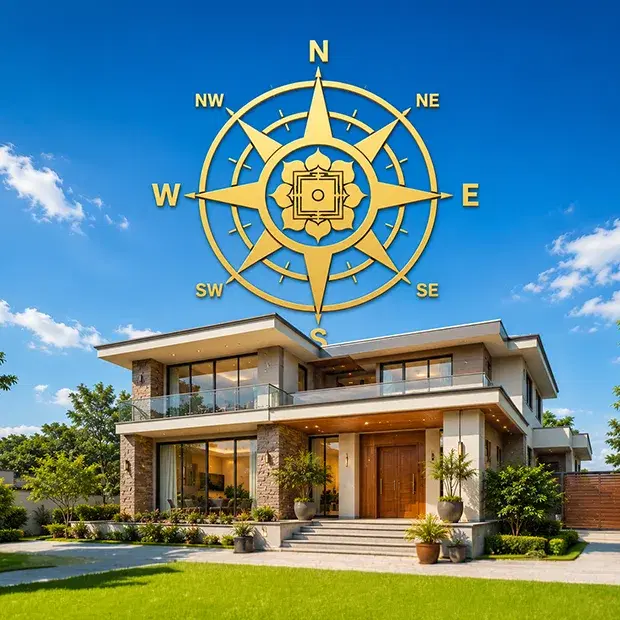
The compass is the primary tool in Vastu analysis. Each of the eight directions North, South, East, West, Northeast, Northwest, Southeast, Southwest governs a different aspect of life and corresponds to a specific elemental energy and deity in the classical texts.
In simple terms:
- North (Kubera's direction) - governs wealth, career, and financial opportunities. The North zone should be open, uncluttered, and never weighed down by heavy furniture or toilets.
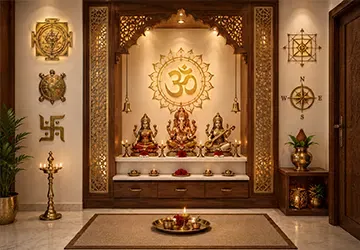
- Northeast (Ishaan corner) - considered the most sacred zone. It governs wisdom, clarity, and spiritual well-being. Water elements and prayer spaces are well-placed here. Defects in the Northeast are among the most serious in Vastu.
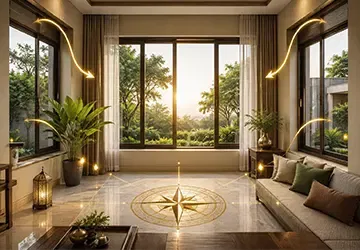
- East (direction of the Sun) - governs health, social recognition, and new beginnings. Entrances and windows facing East bring in morning sunlight - the most sattvic (pure) form of solar energy.
- Southeast (Agni corner) - the zone of fire. The kitchen belongs here. When fire is placed in the wrong zone, it disturbs finances, digestion, and relationships.
- South (direction of Yama) - governs endings, rest, and completion. South-facing bedrooms and heavy walls in the South are considered stabilising.
- Southwest (Nairutya corner) - the zone of stability, longevity, and the head of the household. The master bedroom belongs in the Southwest. Defects here affect the earning member of the family most directly.
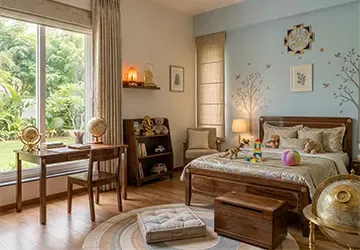
- West (direction of Varuna) - governs gains, completion of efforts, and gains from work. Study rooms and children's rooms can work well here.
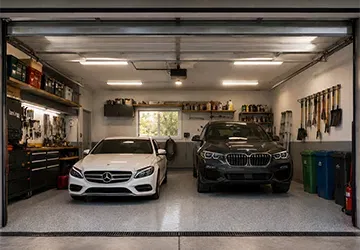
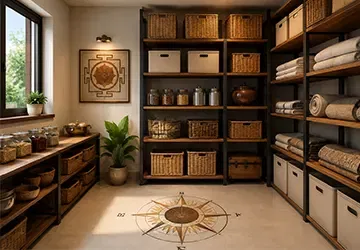
- Northwest (Vayu corner) - governs movement, change, and relationships with outsiders. Guests rooms, storage, and garages align well here.
A Vastu assessment maps your entire home against this directional grid, room by room, to identify where alignment is strong and where there is a conflict.
Common Vastu Problems Found in Indian Homes and What They Mean
Most residential Vastu problems are not the result of carelessness. They come from the way urban housing has developed apartments built without Vastu input, layouts driven by cost efficiency, kitchens placed wherever the plumbing was cheapest to route. The problems are structural, but the remedies usually are not.
Here are the most frequently identified Vastu challenges in Indian residential properties:
1. Wrong Kitchen Direction
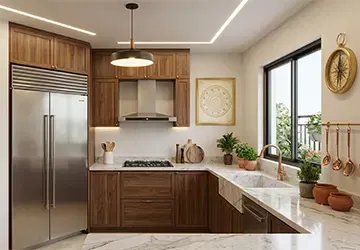
The kitchen represents fire energy (Agni). In Vastu, it belongs in the Southeast. When a kitchen is placed in the North or Northeast, it conflicts directly with water energy and this combination frequently shows up as financial instability, recurring health issues (particularly digestive), and unexplained household tensions. Northwest kitchens tend to create instability, with residents finding it difficult to maintain consistent routines.
2. Toilet in the Northeast
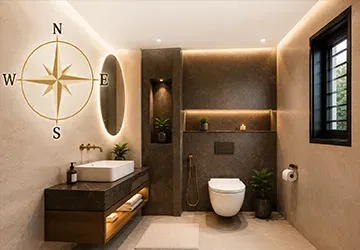
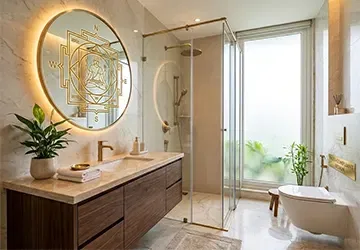
The Northeast (Ishaan corner) is the most energetically sensitive zone of any home. It should be open, light, and unobstructed. A toilet in the Northeast is one of the most serious Vastu defects because it introduces waste energy into the zone that governs clarity and spiritual well-being. It is associated with mental confusion, blocked finances, and persistent decision-making difficulties.
3. Master Bedroom in the Northeast or North
The master bedroom particularly the room occupied by the head of the household or the primary earning member belongs in the Southwest. This zone provides stability, grounding, and control. When the master bedroom is in the North or Northeast, the occupant often experiences lack of authority, financial pressures, or a feeling of being directionless, despite working hard.
4. Main Entrance Facing South or Southwest
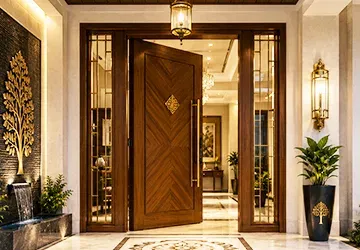
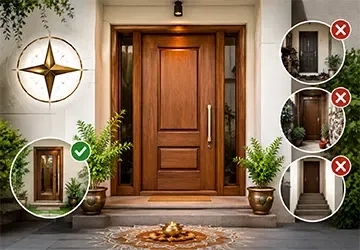
South and Southwest entrances are among the more challenging in classical Vastu. They are associated with effort that does not convert into proportionate results people work hard but obstacles keep appearing. They are not impossible to manage, but they require careful remediation: the right threshold treatments, door materials, and entrance decor to redirect energy flow.
5. Irregular or Cut Plots and Flats
Ideal Vastu shapes are square or rectangular. L-shaped flats, corner-cut units, or plots with missing corners create zone deficiencies. A missing Northeast corner, for instance, removes the property's most beneficial zone. A missing Southwest corner creates instability at the root of the household. These require specific compensatory remedies.
6. Beams and Columns in Critical Positions
Exposed beams running across a bedroom especially over the bed or seating are a common source of low-grade stress, headaches, and sleep disruption. In flats, structural columns in the middle of living spaces can create energy blockages. These are not always movable, but they can be neutralised through placement and design decisions.
7. Clutter in the North and Northeast
The North zone governs wealth and career, and it needs to be relatively open and light. Heavy storage, old objects, or blocked windows in the North are among the easiest Vastu problems to fix and among the most commonly overlooked. Similarly, Northeast clutter compresses the zone that should be freest.
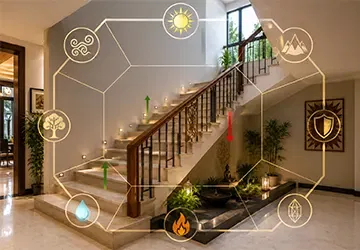
8. Staircase in the Northeast
Staircases introduce downward energy. In the Northeast, this is particularly problematic it metaphorically drags down the zone associated with upward progress, health, and clarity. Staircases are ideally placed in the South, Southwest, or West.
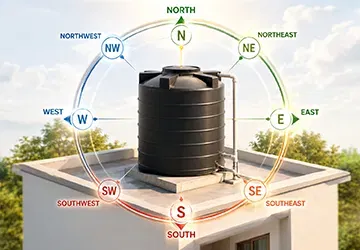
9. Underground Water Tank in the South or Southwest
Water storage tanks are associated with flow and fluidity. The South and Southwest zones are meant to be heavy and stable not water-bearing. Underground tanks in these zones can destabilise the household's foundations, often showing up as recurring legal disputes, unexpected losses, or health issues in the male members of the family.
10. Mirror Placement Reflecting the Bed
This is one of the most common and most frequently dismissed Vastu concerns in bedrooms. A mirror that reflects the bed disrupts sleep quality, amplifies emotional energy in the space, and can contribute to anxiety and restlessness. It is also a common source of relationship tension in the master bedroom.
How Ms. Seema Bhatia Works - Her Diagnostic and Solution Process
Seema Bhatia has been practising residential Vastu for over 12 years, working with more than 3,000 clients across India and internationally. Her approach is built around one principle: precise diagnosis before any prescription.
A lot of Vastu advice available online and from less rigorous consultants is generic. 'Put a tulsi plant in the North.' 'Avoid south-facing bedrooms.' These tips are not wrong, but they are incomplete. The same physical layout affects different households differently, depending on occupant details, the specific defects present, and the surrounding environment. This is why Seema does not offer pre-written advice.
Step 1 - Understanding the Space and the People in It
The first step is not analysis it is listening. Before looking at any floor plan, Seema asks about what is actually happening in the household. What specific patterns have you noticed? Which family members are most affected? What has changed? When did the problems begin and what else changed at the same time?
This conversation shapes what she is looking for in the analysis. A client experiencing persistent health issues in the family's eldest child directs attention differently than one dealing with a stalled business. The same layout may read differently depending on what the family is experiencing.
Step 2 - Floor Plan Analysis and Directional Mapping
Seema works from a scaled floor plan and accurate compass readings. For on-site consultations in Delhi and NCR, she visits the property directly taking her own compass readings, surveying the layout zone by zone, and assessing the entrance, threshold, and surrounding area. For online consultations, clients share a floor plan and confirm the property's North direction.
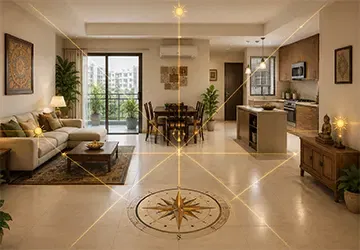
She then maps the floor plan onto a directional energy grid, identifying which rooms sit in which Vastu zones and whether the activities happening in each zone align with or conflict against that zone's elemental nature.
Step 3 - Identifying Vastu Doshas (Defects)
The analysis produces a clear picture of where the defects are, what category they fall into, and how serious they are. Some defects are structural a toilet in the Northeast is not relocatable without major work, and this calls for a different kind of remedy than a misplaced mirror. Seema categorises the findings by severity and by remediation pathway.
She uses charts, directional bar graphs, and grading tables to document the findings not just verbal impressions. This creates a clear record of what the situation is before any changes are made.
Step 4 - Non-Demolition Remedies, Room by Room
This is the part that most clients find surprising. The full range of corrections available in Vastu does not require breaking a single wall. Seema's entire practice is built on non-demolition remedies and this is not a compromise. It is a deliberate discipline developed over years of practical work.
The remedies she prescribes work through:
- Placement corrections - relocating furniture, beds, and storage to align with directional zones
- Activity reassignment - moving the purpose of a room to better match its Vastu zone (e.g. swapping bedroom and study room)
- Elemental balancing - introducing the right materials, colours, plants, or objects to strengthen or suppress specific energies
- Colour corrections - Vastu-specific colour choices for walls, doors, and furnishings that align with each zone's elemental energy
- Threshold and entrance treatments - specific adjustments to how the main door and entry zone are presented and used
- Crystal, metal, and natural material remedies - selected items placed in specific zones to correct directional deficiencies
Every remedy is matched to the specific defect and the specific property. There is no generic prescription list.
Step 5 - Written Report
After the analysis, every client receives a written report documenting: the zones assessed, the defects identified (with severity rating), the remedies recommended (with specific placement instructions), and the rationale behind each recommendation. Online clients receive this within 3 working days. On-site clients within 7.
This is an important part of Seema's process. Verbal-only consultations are common in the industry they are also easy to misremember and hard to implement correctly. A written report means you can return to it months later, share it with a family member or interior designer, and track whether each remedy has been applied.
Step 6 - Follow-Up
Once the remedies are implemented, Seema follows up. This is not standard practice in the Vastu industry. Most consultants deliver their report and consider their work done. Seema's follow-up checks whether changes have been made correctly, whether further fine-tuning is needed, and what the household's experience has been in the weeks after implementation.
Residential Vastu for Different Property Types
Vastu principles are the same across property types, but the challenges differ by format. Seema works across all residential categories:
Vastu for Flats and Apartments
Apartments are the most common residential property type in urban India, and they present specific Vastu challenges. Builders do not design apartment layouts with Vastu in mind. Buyers often end up with kitchens in the North, master bedrooms in the East, and entrances that face whatever direction the building faces not what is ideal. Seema analyses the individual unit's layout, the building's entrance orientation, and the floor-level to produce flat-specific remedies that work within the layout you have.
Vastu for Independent Houses
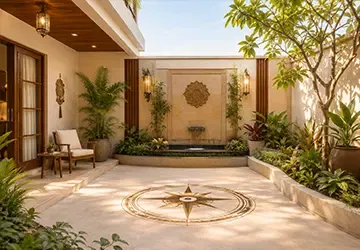
Independent houses offer more remediation options because the occupants typically have more control over room purpose, garden layout, boundary walls, and outdoor zones. A house can be assessed more comprehensively including the plot's shape, the direction of the road, slope, and underground water sources. Seema covers all of these in a full house assessment.
Vastu for Villas
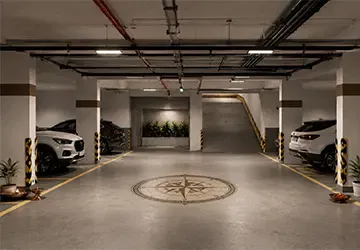
Villas typically combine the complexity of a house assessment with the presence of multiple floors, landscaping, and additional zones like basements, garages, and swimming pools. Each of these has its own Vastu considerations. Swimming pools, for instance, should ideally be in the North or Northeast not the South or Southwest. Basements carry downward energy and require specific management.
Vastu for New Homes (Pre-Move)
Getting a Vastu assessment before you move in or before you buy gives you the most options. At this stage, room purposes can still be assigned, furniture layouts can be planned from scratch, and colours chosen before walls are painted. It is considerably easier to align a space before you settle into it than to correct it afterwards.
Vastu for Griha Pravesh
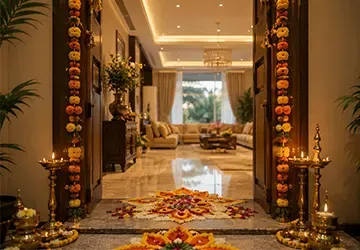
Griha Pravesh is the formal entry into a new home. Vastu for Griha Pravesh prepares the space energetically before you move in — ensuring the entrance zone is clear, auspicious placement of the first objects brought into the home, and a reading of whether the timing aligns with directional energy. This is a distinct service from a full Vastu audit, though many clients choose to do both together.
Online vs On-Site Vastu Consultation - What's the Difference?
Both consultation formats deliver the same depth of analysis and the same written report. The method of gathering information differs.
On-Site Consultation (Delhi/NCR)
Seema visits your property in person. She brings her own compass and takes direct readings at each critical zone the entrance, the Vastu for Kitchen, the bedrooms, and any zones of particular concern. This is especially valuable for properties with irregular shapes, multiple floors, or where the client has doubts about the accuracy of an existing floor plan.
Online Consultation (Pan-India and International)
You share a scaled floor plan and the accurate North direction for your property. This can be confirmed via a compass app on your phone, or via Google Maps satellite view. Seema analyses the digital floor plan with the same systematic directional mapping she uses on-site. She may ask follow-up questions over WhatsApp or email. The written report is delivered within 3 working days.
Online consultations work well for most residential properties. They are the preferred option for clients outside Delhi, NRIs, and anyone managing the process from a distance.
Who Should Consider a Residential Vastu Consultation?
There is no ideal time to do a Vastu consultation though earlier is always easier. These are the most common situations where a residential Vastu assessment makes sense:
- Before purchasing a flat or plot - A pre-purchase Vastu check helps you assess whether the layout is fundamentally sound before you commit. Some structural defects like a toilet in the Northeast are hard to remedy; it is better to know before signing.
- During construction planning - If you are building, this is the optimal moment. Room layouts, entrance direction, kitchen placement, and staircase position can all be decided with Vastu in mind, before a single wall goes up.
- Before a Griha Pravesh - Moving into a new home is an important transition. A pre-move assessment ensures the space is ready not just furnished and cleaned, but energetically prepared.
- When recurring problems have no clear explanation - Financial stress that persists despite reasonable income. Health issues that keep returning. Conflict that won't resolve. When you have addressed every practical factor and the problem continues, it is worth examining the environment.
- After a renovation - Renovations change room layouts, sometimes significantly. A post-renovation assessment confirms that the changes made are directionally sound.
- For NRIs managing Indian property - If you own property in India and are managing it from abroad, an online Vastu consultation gives you a documented, actionable report you can implement through family or staff.
About Ms. Seema Bhatia - Background, Credentials, and Practice
Seema Bhatia is a Delhi-based Vastu consultant with over 12 years of full-time practice in residential and commercial Vastu. She grew up in a prominent business family in Delhi, where conversations about space, energy, and architecture were part of everyday life not an abstract interest.
She holds a BSc in Science and has been awarded a Silver Medal in Interior Designing. In 2021, she received the Indian Entrepreneurship Award from a nationally recognised organisation. Her work sits at the intersection of Vastu science and spatial design she also offers scientific logo designing services based on numerology and astrology, a practice that draws from the same framework of directional energy and elemental balance.
Her client base spans more than 3,000 consultations, with a presence across 5+ countries. She works with families, property buyers, NRIs, and occasionally with developers and architects during the pre-construction phase.
What distinguishes her practice is precision and documentation. Every consultation ends with a written report. Every remedy is non-demolition. Every client receives a follow-up. These are not marketing points they are the baseline of how she works.
Credentials at a glance: 12+ Years Practice | 3,000+ Clients | BSc + Silver Medal (Interior Design) | Indian Entrepreneurship Award 2021 | 5+ Countries | 100% Non-Demolition Approach
Consult a Residential Vastu Expert - Start With a Conversation
If you have read this far, you are likely already sensing that something in your home's layout or energy may be worth examining. That is a reasonable instinct.
A residential Vastu consultation with Seema Bhatia starts with a conversation no floor plan required, no commitment, no pressure. You describe your property, your situation, and what you are hoping to understand. She will tell you what the consultation involves, what it would cost, and whether she thinks it can help you.