12+
Years of Experience
3000+
Satisfied Clients
5+
International Presence
99%
Success Rate
100%
Authenticity And Transparency
Highlights
Bedroom Vastu - Direction & Placement
Based on 58 Google Reviews
Avoid Facing The Door
Sleeping With Your Head Facing Door, Cause NightmaresAchieve Sound Sleep
Right Direction Ensures Peaceful SleepCeiling Of The Bedroom
Use Tranquil and Relaxing Lights
About
About Vastu For Bedroom
The right Vastu for bedroom decides how well you rest and recover each night. Where the room sits, which way your head points, and how the bed is placed all shape the flow of energy around you. Get these right and sleep comes easier; get them wrong and rest feels broken even after eight hours. This guide covers why the room matters, the ideal directions, what to avoid, colours, structure, and simple fixes for homes where the layout is already set.
Even small details like mirror placement, the position of electronic devices, or clutter under the bed can quietly disturb this balance. A bedroom that follows Vastu principles tends to feel calmer the moment you walk in, without you quite knowing why. Couples often notice better harmony in the relationship once the room's energy is corrected.
And for those who can't rearrange walls or doors, targeted remedies can still bring the space closer to balance.
You spend close to a third of your life in one room - the bedroom - and almost all of it with your eyes shut. No other space in the house holds you for so many unbroken hours. This is exactly why Vastu for bedroom is treated as more important than Vastu for a living room or a study. During the day you are active and pushing back against your surroundings. In sleep you do the opposite: the body goes quiet, its defences lower, and repair takes over. Vastu holds that this is the window when a person absorbs the energy of a space rather than resisting it.
Put simply, a bedroom that is even slightly "off" reaches you at the exact moment you can least correct for it. That is the real need behind bedroom Vastu - not decoration or superstition, but the environment you quietly marinate in for seven or eight hours, night after night, for years. A well-aligned bedroom is working to protect several things at once:
- Sleep quality - how fast you fall asleep and how deep it stays.
- Your mood on waking - whether you rise settled or already tense.
- Relationship calm - the room a couple shares sets the tone for how they treat each other.
- Physical recovery - the body does most of its healing while you sleep.
- Mental clarity - a restless room shows up the next day as a foggy head.
Vastu Shastra is an Indian science of architecture with roots stretching back thousands of years to the Vedic texts. It maps every space to the five elements and to the path of the sun, and it has shaped how homes on the subcontinent were built for generations. People believe in it partly because of that long tradition - and partly because, across thousands of households, the outcomes people report after correcting a bedroom (calmer sleep, fewer arguments, a home that simply feels lighter) keep repeating.
The part a sceptic can still use
A surprising amount of bedroom Vastu lines up with principles you would follow even if you set the spiritual side aside. Orienting a room to catch morning light, keeping it cross-ventilated, moving electronics and clutter away from the pillow, giving the head solid support against a wall, keeping the room cool, dark and uncluttered - modern sleep science and interior design arrive at the very same advice for their own reasons. So even someone who does not accept the metaphysics tends to sleep better after following most of it. That overlap is a large part of why the practice endures.
Why give it weight at all
The traditional explanation for sleeping with the head to the south is magnetic: the earth behaves like a giant magnet, the human body carries its own subtle polarity, and Vastu teaches that a head-south position works with that pull instead of against it. Whether or not you accept the mechanism, the recommendation is free, reversible, and carries no downside - and following the framework nudges you into designing a genuinely calmer bedroom. That combination of low cost, no risk, and a real push toward intentional living is why so many people give bedroom Vastu the benefit of the doubt.
Almost every bedroom rule makes more sense once you know the logic underneath it. Vastu divides a space by the Panchabhutas - the five elements - and assigns each to a corner. Learn which element rules which zone and you stop memorising rules and start seeing why the bed, the wardrobe and the windows belong where they do.
- Earth (Prithvi) - south-west. Heavy, stable, settled. This is why the master bed and the heaviest furniture anchor here.
- Water (Jal) - north-east. Light, clear, reflective. This corner wants to stay open and uncluttered, never loaded with weight.
- Fire (Agni) - south-east. Hot and active. Rest struggles against it, which is why sleep and this corner rarely mix well.
- Air (Vayu) - north-west. Movement and change. It suits guests, short stays and good ventilation.
- Space (Akash) - the centre (Brahmasthan). The room's "lungs." Keep the middle of the room clear so energy can circulate.
The south-west (Nairutya) is the ideal direction for the master bedroom. This corner carries the earth element and a heavy, settled quality that matches rest, stability and the long-term security a home's main couple needs. When the head of the family sleeps here, decisions tend to feel steadier and the household finds a calmer footing.
If the south-west is not available, the south or the west are dependable alternatives. Both hold grounding energy and support deep sleep without the restlessness lighter zones can bring.
Sleeping direction matters as much as the room itself. Rest with your head towards the south and feet towards the north. This aligns your body with the earth's magnetic pull and is linked in Vastu with sound health and unbroken sleep. The east is a strong second choice, and it suits students and working professionals who need sharper focus during the day.
Rooms for different members follow the same logic. A children's or study bedroom sits well in the east, with the child sleeping head to the east. The north-west works for guest rooms and unmarried daughters, as its airy, mobile energy encourages movement and fresh starts.
Use this as an at-a-glance reference for the whole room. The "why" column is the element logic; the last two columns turn it into practical placement.
| Zone | Element | Energy / Why | Best Use in the Bedroom | Keep Out of This Zone |
|---|---|---|---|---|
| North-east | Water | Lightest, most open energy | Leave empty; a light corner, small window | Bed, heavy wardrobe, storage, shoe rack |
| East | Air / Sun | Fresh, rising, focus | Children's or student's bed; study desk facing east | Bulky cupboards blocking morning light |
| South-east | Fire | Hot, restless, active | Only if unavoidable – keep it a quiet corner | Main bed, chargers, inverter, heaters clustered |
| South | Earth-lean | Grounding, restful | A dependable alternative for the main bed | Large open glazing that drains the weight |
| South-west | Earth | Heaviest, most stable | Master bed + heaviest furniture (the anchor) | Cuts, voids, toilets, water storage |
| West | Earth-lean | Solid, supportive | Second-best zone for the main bed | Leaving it hollow and unweighted |
| North-west | Air | Mobile, changeable | Guest room, older children, ventilation | The long-term master bed |
| North | Water-lean | Cool, flowing | Light storage, a work nook | Heavy earthy weight that blocks flow |
| Centre | Space | The room's breathing space | Keep open and walkable | Heavy furniture, beams, low-hanging fittings |
Keep the bedroom out of the north-east. This corner, the Ishanya, holds the lightest and most sacred energy of the home and belongs to prayer or meditation. A bedroom placed here can leave occupants feeling drained and unfocused over time.
The south-east is the fire zone (Agni). A bedroom in this corner tends to stir restlessness and friction, and for couples it is often linked with frequent disagreements. If a room already sits here, it is better used as a study or a rarely occupied space than as the main sleeping room.
Never sleep with your head pointing north. Vastu treats this as the most draining orientation, working against the body's natural polarity and disturbing rest.
A quick reference for the everyday decisions that make or break a bedroom's Vastu - from where the bed sits to where you keep your charger.
| Area | Do | Don't |
|---|---|---|
| Bed Position | Push the bed against the south or west wall with the headboard on solid support, leaving a small gap for air. | Float the bed in the middle of the room or set the headboard against a window. |
| Bed Build | Choose a solid wood bed and, for couples, a single unbroken mattress. | Use a heavy metal-frame bed or two joined mattresses that create a divide between partners. |
| Weight & Balance | Load the heaviest furniture - wardrobe, chest and bed-into the south-west. | Pile heavy furniture into the north or north-east, which should stay light and open. |
| Doors | Place the bedroom door on the north, east or north-east wall and let it open fully. | Set two doors directly in line with each other, or block the door from opening freely. |
| Water & Bathroom | Keep any attached bathroom door shut and its floor dry. | Store water or a water filter in the room's north-east corner. |
| Electronics | Keep the south-east corner and your bedside clear and tidy. | Cluster chargers, inverters and gadgets in the south-east or right beside your pillow. |
| Windows & Light | Set windows on the east or north to pull in morning light. | Rely on large west- or south-facing glazing that traps harsh afternoon heat. |
| Bed Shape | Pick a rectangular or square bed with clean lines. | Choose round or irregular bed shapes that unsettle the room's geometry. |
Most bedroom guides stop at the compass and the bed. But the ceiling over your head, the floor beneath you, and the rooms on the other side of your walls all carry weight in Vastu - literally and energetically. These are the issues people most often miss, and many have simple fixes even when the layout is fixed.
| Structural Issue | Why Vastu Flags It | Practical Remedy |
|---|---|---|
| Exposed Beam Over the Bed | A beam presses a constant downward weight onto the sleeper, breaking calm. | Reposition the bed out from under it, or box it in with a false ceiling so the surface reads flat. |
| Sloped or Slanting Ceiling | Uneven height creates uneven, unsettled energy over the sleeper. | Place the bed under the higher side; a false ceiling or level canopy evens it out. |
| Bed Under a Window | The head gets no solid backing that a wall would give. | Shift the headboard to a solid wall; if impossible, use a tall solid headboard and heavy curtains. |
| Toilet or Bathroom Above the Bedroom | Downward, draining energy is believed to sit over the room. | Avoid placing the bed directly beneath the upstairs wet area; keep that ceiling zone clear. |
| Kitchen or Water Tank on the Floor Above | Fire or heavy water overhead unsettles the rest zone below. | Relocate the bed away from directly under it where the plan allows. |
| Bedroom Over a Garage or Void | A hollow, unstable base under a room meant for grounding. | Weight the room well (solid furniture in the south-west) and keep the floor covered and warm. |
| Room Under a Staircase / Over a Pooja Room | Pressure from above, or sacred energy that a bedroom sits heavily upon. | Prefer not to sleep here; if fixed, keep the space light, clean and minimal. |
| Irregular, L-Shaped or Cut-Corner Room | Missing corners unbalance the element map of the room. | Anchor the intact south-west; use mirrors or lighting to visually "complete" the missing corner. |
Earthy, restful tones are the safe default for any bedroom - but you can go one level deeper by matching the shade to the direction the room or wall faces. A colour that steadies a south-west room can feel heavy in a north-east one. This map fine-tunes the palette by zone.
| Room / Wall Direction | Recommended Shades | Why It Works |
|---|---|---|
| North-east | White, pale blue, soft lilac | Keeps the lightest zone open and clear. |
| East | White, light green, pale yellow | Amplifies fresh, rising morning energy. |
| South-east | Cool greens, soft blues (not reds) | Cools the fire zone instead of feeding it. |
| South | Muted terracotta, ochre, warm coral | Warm without overheating the room. |
| South-west | Earthy brown, beige, mud & sand tones | Deepens the grounding this corner already carries. |
| West / North-west | Cream, off-white, light grey | Light, airy neutrals suit the mobile zones. |
| North | Soft green, pastel blue | Cool, flowing shades match the water-lean zone. |
| Ceiling (Any Room) | Off-white or the palest tint | Keeps the "sky" light and the room from feeling low. |
Keep as accents only, never full walls: pure black, aggressive full-wall red, and heavy dark navy - these overload a room meant for rest.
A bedroom's energy is decided not just by the walls but by the small things you live with - the details most people never think to check.
Under the bed
- Ideally keep the space under the bed empty and clean so air and energy can move freely.
- If you must store, limit it to soft, clean bedding only - never water, metal, footwear, medicines, or old and broken items beneath where you sleep.
Around and above the bed
- Never place heavy overhead storage or a loft directly above the head of the bed.
- Keep bedside surfaces tidy and roughly symmetrical; avoid piling clutter or a heap of gadgets by the pillow.
Plants, clocks & wall art
- Bedrooms are not the ideal home for greenery; if you want a plant, keep one small, air-friendly variety and avoid thorny plants like cactus and large aquariums or water features.
- Hang a working wall clock on the east or north wall - a stopped or broken clock is discouraged.
- Place family photos and art on the south or south-west wall, and choose calm, hopeful imagery - avoid scenes of war, sorrow, isolation or fierce imagery in the room where you rest.
- A bedroom is not an ideal place for a temple or pooja setup; if there is no alternative, keep it in the north-east corner and curtain or close it at night.
The same room serves different people differently. Who sleeps in a bedroom changes what it should support - harmony for a couple, calm for an expecting mother, grounding for elders, focus for a student.
For married couples & newlyweds
- Keep the couple in the south-west so the relationship sits on the most grounded, stable footing in the home.
- Build symmetry: matched bedside tables and lamps on both sides signal balance and equal footing between partners.
- Don't turn the couple's room into a store for old, broken or unfinished things - the room should hold the present, not the past.
- Fresh flowers and soft, warm lighting keep the room's mood generous rather than tense.
For expecting mothers
- Favour a calm, grounded room - south or south-west - with good light and steady ventilation for rest through the day.
- Avoid resting long-term in a south-east (fire) bedroom during pregnancy; keep the north-east of the room clean and open.
- Vastu traditionally advises against renovation, drilling or heavy structural work inside the room while pregnant - keep the space settled and quiet.
- Keep the sleeping orientation gentle (head south or east) and the room free of harsh, loud or cluttered corners.
For elderly parents
- A south or south-west room on an accessible floor gives elders the grounding and stability Vastu associates with security.
- Give the head solid wall support, keep the room warm-toned, and place it near a bathroom for ease and safety.
- Avoid isolating them in a restless, high-movement north-west corner far from the household.
For children & students
- Beyond the direction basics, place the study desk so the child faces east or north while working - the focus-friendly orientations.
- Keep a child's room lighter and less cluttered than an adult's, and don't let the foot of the bed point straight out of the door.
Most homes have fixed layouts, and a less-than-ideal room is not a lost cause. When the master bedroom cannot sit in the south-west, add the correction inside the room: place the heaviest furniture along the south and west walls to build grounding weight where Vastu wants it.
Keep a small bowl of sea salt in a corner and replace it every month to absorb heavy energy. Whatever the room's direction, still sleep with your head to the south or east - the sleeping orientation is one of the easiest and most effective fixes.
Keep any attached bathroom door closed, and for a south-east room, favour calm, soft decor and the cooler colours from the map above to settle the restless edge of the fire zone.
Before you call anyone, you can read your own room. Open a compass app, stand just inside the bedroom door, and run these seven quick checks.
Locate the room.
- Which zone does the bedroom fall in, relative to the centre of your home? South-west is ideal; north-east and south-east are the ones to watch.
- Check the head direction. Lie down as you normally sleep - which way does your head point? South or east is what you want.
- Look behind the headboard. Is there a solid wall backing your head, or a window / open gap?
- Look up. Is there a beam, a slope, or a loft sitting directly over the bed?
- Scan the south-east corner. Are chargers, the inverter, the router and other electronics clustered near where you sleep?
- Open the wardrobe. Is the heaviest weight in the room sitting in the south-west, or has it drifted to the wrong side?
- Finish at the north-east & the bathroom. Is the north-east corner clean and open, and is any attached bathroom door kept shut?
Two or three "wrong" answers are completely normal and usually fixable without moving a single wall. When several answers cluster in the north-east or south-east, that is the point where a floor-plan-level reading earns its keep.
Benefits
Benefits of Correct Bedroom Vastu
Enhanced Mental Peace
Captivating Cosmic Energies
Harmonious Relation
Sound Sleep
Vastu Tips
Important Tips & Points of Bedroom Vastu
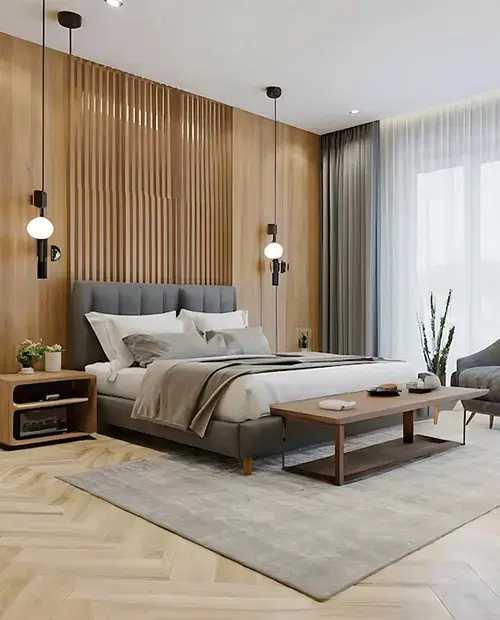
POINTS TO BE TAKEN UNDER CONSIDERATION
- Using Gadgets A Few Hours Before Sleeping Escalates Sleeping Issues
- Non-Ventilated Rooms Can Attract Negative Energies
- Beds Should Never Face The Mirror
- Using Paintings Portraying Love and Harmony, Attracts Positivity
- Always Keep Your Room Tidy and Clean
Scientific Vastu
Subscribe on YouTubeMake Bedroom Space Vastu Compliant
Featured
Why Choose Us
Why Choose Layered Vastu for Bedroom Vastu
100% Certified
Authentic Documents, Showcasing Legality100% Customer-Centric
Customization As Per Client's RequirementLifetime Assistance
Offering Services For The Entire LifespanFAQ
Vastu For Bedroom - People also ask
The south-west is the best direction for a master bedroom as per Vastu. It carries stability and grounding energy that supports rest and long-term security. If the south-west is not available, the south or west works well. Keep the north-east free of bedrooms, as it suits prayer and meditation instead.
Sleep with your head towards the south and feet towards the north for the deepest rest as per Vastu. The south alignment works with the earth's magnetic pull and supports sound health. The east is a good second choice, especially for students and working professionals. Avoid pointing your head to the north.
A bedroom in the north-east is best avoided as per Vastu. This zone, called Ishanya, holds sacred and light energy suited to prayer or meditation, not sleep. A bedroom here may affect health and focus. If it cannot be changed, keep the corner light, uncluttered, and use it as a guest room.
Place heavy furniture like the bed or wardrobe along the south and west walls to add grounding weight where Vastu wants it. Keep a bowl of sea salt in the room and change it monthly. Sleep with your head to the south, use earthy tones, and keep any attached bathroom door shut.
Soft, warm and earthy shades suit a bedroom best as per Vastu - think light beige, muted brown, soft green, or gentle blue. These tones calm the mind and support rest. For south-west rooms, earthy browns work especially well. Keep strong reds and dark greys for accents only, not full walls.
Position the bed against the south or west wall so the headboard rests on solid support as per Vastu. This gives a sense of safety and stability while you sleep. Leave a little space between the bed and the wall for air. Avoid placing the bed directly under an overhead beam.
A bedroom in the south or south-west is considered good as per Vastu, particularly for the head of the family. The south-west especially brings stability, security and restful sleep. A south bedroom supports health and steady finances. Place the bed against the south wall and sleep with your head pointing south.
Place a children's or students' bedroom in the east or north-west as per Vastu, with the child sleeping head to the east for focus and learning. The north-west suits guest rooms and unmarried daughters, as its airy energy encourages movement. Keep the south-west for the parents or head of the household.
Explore More
Similar Vastu Services
Vastu For Main Home Entrance
Make an auspicious entrance
Read More
Vastu For Cross Ventilation
Let the fresh air enter your home
Read More
Vastu For Garage
Welcome goodness from the garage
Read More
Vastu For Toilets
Make your living healthy
Read More
Vastu For Villa
Get the beautiful and positive living
Read More
Vastu For Griha Pravesh
Make an auspicious entry
Read MoreReady to Transform Your Space?
Get expert Vastu guidance from Seema Bhatia. Start your journey to harmony and prosperity today.