
12+
Years of Experience
3000+
Satisfied Clients
5+
International Presence
99%
Success Rate
100%
Authenticity And Transparency
Highlights
House Vastu - Directions & Zones
Based on 58 Google Reviews
Kitchen Zone
South east suits fire safelyMaster Bedroom
South west anchors deep restSacred Corner
North east stays open, uncluttered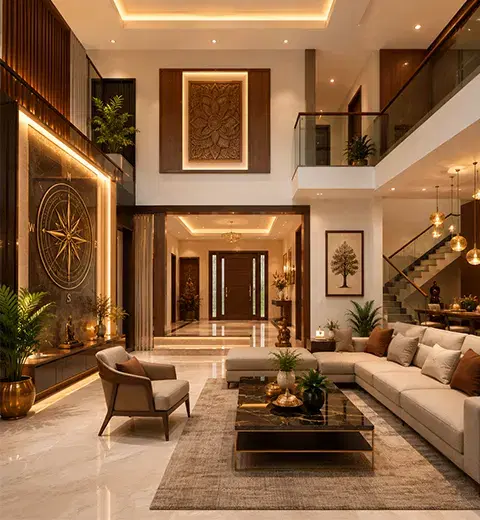
About
About Vastu For House
Vastu for house is the practice of arranging a home so that its room positions, entrance, light and airflow line up with direction. Drawn from Vastu Shastra, it maps a house against eight directions and five elements, then places each room in the zone that suits its purpose: the kitchen in the south east, the master bedroom in the south west, prayer space and open ground in the north east, and toilets kept away from the sensitive corners. The same logic applies to plots, independent houses, villas and builder flats. Most corrections are non-structural, resting on placement, colour, decluttering and better daylight rather than demolition. This page covers entrance direction, room-wise placement, plot shape, water and toilet position, colour choices, and the Vastu dosh remedies families ask about most.
A house is not only brick and beam. It sits on a plot, faces a direction, and receives sun and wind in a fixed pattern every single day. Vastu for house works with that pattern. The five elements give the reasoning: earth carries weight, so heavy walls and storage settle in the south and west; water asks for the north east, which is why underground tanks and prayer corners sit there; fire belongs in the south east, which is why the kitchen and electrical load go to that corner; air moves through the north west, suiting ventilation and guest rooms; and space stays free at the centre, the Brahmasthan, which is kept open. Room placement follows from that reasoning, and entrance direction, daylight, ventilation and clutter decide how well any of it actually works.
Problem - When rooms sit in the wrong zones, families notice it in ordinary ways first: broken sleep, morning arguments around the kitchen, money that leaves faster than it arrives, and a house that never feels restful despite being well built.
Information - Verified Vastu gives you direction logic rather than superstition, a room-to-zone map you can check with a compass, and remedies that work through repositioning, colour and light, so the great majority of homes need no construction at all.
Who Needs This - First-time buyers evaluating a property before booking, families shifting into a new house, builders finalising floor plans, interior designers reworking layouts, and NRI investors who have to judge a home from a plan and a video call.
The entrance decides the tone
The main door is treated as the mouth of the house, the point where opportunity enters. North, east and north east entries are considered the most supportive, since they receive gentle morning sun and are linked with growth, clarity and new beginnings. A north east entrance is the most valued of the three. West entries are workable, and south entries need care in placement rather than outright rejection.
What matters as much as direction is the condition of the entry. The door should open inward and clockwise, into a well-lit space, not into a wall or a bathroom door. Keep the threshold clean, keep shoe racks and dustbins out of sight, and make sure the door opens without noise or resistance. A well-made door in the right zone does more for a house than a shelf of remedies.
The single rule that carries the most weight in any house is the balance between the two diagonal corners. The south west is the earth corner, associated with stability, and it should hold the heaviest parts of the house: thick walls, the master bedroom, wardrobes, storage and the tallest structure. The north east is the water and space corner, the Ishanya, and it should stay the lightest and most open part of the plot. Keep the north east free of toilets, heavy furniture, staircases, storerooms and clutter. Where possible, keep it slightly lower in level and better lit than the rest of the house.
Get this diagonal right and much else falls into place. Get it inverted, and no amount of decorative correction quite settles the home.
The centre of the house, the Brahmasthan, is best left free of heavy load. Traditionally it holds no staircase, no toilet and no large fixed furniture. In older homes this became the courtyard. In a flat, it is enough to keep the central area of the plan uncluttered and reasonably lit.
Room Placement by Direction
| Direction | Element | Best used for | Keep away from this zone |
|---|---|---|---|
| North | Water | Living room, cash locker facing, main entry | Heavy storage, toilets |
| North East | Water and space | Pooja room, water tank, open space, entry | Toilets, kitchen, staircase, storeroom |
| East | Air and light | Entrance, bathroom windows, dining, children’s room | Blocked windows, tall boundary walls |
| South East | Fire | Kitchen, geyser, electrical panel, inverter | Water tank, master bedroom |
| South | Fire and earth | Guest room, staircase, storage, tall trees | Main entrance in a weak position |
| South West | Earth | Master bedroom, wardrobes, heavy furniture | Toilets, water tank, hollow spaces |
| West | Water and earth | Children’s study, dining room, kitchen alternative | Excess clutter |
| North West | Air | Guest bedroom, daughter’s room, garage, toilet | Master bedroom, cash storage |
| Centre | Space | Open, light, free movement | Staircase, toilet, heavy load, beams |
Buyers often skip this step and regret it. The plot shapes what the house can ever be.
Square and rectangular plots are the most favourable. Plots that extend towards the north east, sometimes called an Ishan extension, are considered auspicious. Cuts in the north east corner are the ones to watch, since that corner is hardest to compensate for later. Triangular and sharply irregular plots are traditionally avoided, though many can be regularised by fencing off the awkward portion and building on the regular part.
Look at the road too. Roads on the north or east side are considered favourable, and a plot with roads on both is the one builders quote a premium for. Slope matters as well: land that falls gently towards the north or east is preferred, and a slope rising towards the north east is best corrected during levelling.
Most homes have some deviation. Very few need a hammer. These are the corrections that come up repeatedly in real consultations.
- Kitchen in the north east: shift the cooking platform so the burner sits in the south east portion of the kitchen, keep the north east of the room clear of appliances, and reduce heat and clutter in that corner.
- Toilet in the north east: keep the door closed, keep the exhaust running, place a bowl of sea salt inside and replace it regularly, and stop using the space for storage.
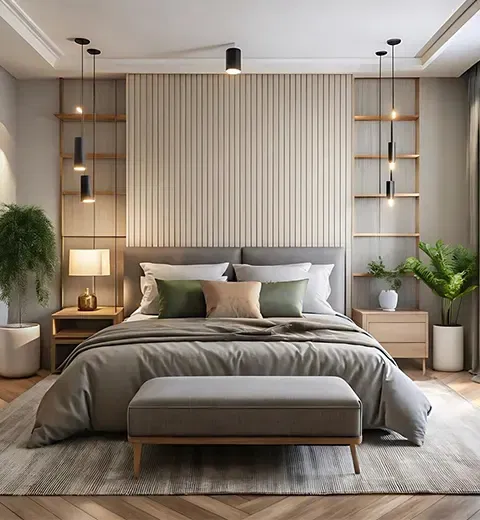
- Master bedroom in the north east or south east: move the couple’s bedroom to the south west if any room is available there. If not, sleep with heads towards the south, use grounded earthy tones, and remove mirrors that face the bed.
- Beam over the bed or seating: shift the furniture out from under it, or box the beam in with a false ceiling so the load is visually lifted.
- Missing north east corner: keep that side of the house especially clean and well lit, add a light source or a mirror on the adjacent wall, and keep plants in that zone healthy.
- Clutter anywhere: the least glamorous remedy and the most consistently effective one. Clear the loft, the balcony corner and the space behind doors first.
Any pyramid, yantra or metal strip should follow an assessment, not precede one. Objects are not the correction; placement is.
Colour is the cheapest correction available. Light shades that reflect daylight work in almost every Indian home: white, ivory, cream, pale yellow, light green and soft blue. Match them to the zone where you can. Whites and pale yellows suit the north east, greens work in the north and east, soft blue settles the west, and warm earthy tones such as beige, terracotta and muted browns hold the south west well. Reds and strong oranges belong as accents in the south east rather than as full walls.
Daylight and ventilation carry more weight than any of it. East-facing windows, cross ventilation between opposite walls, and windows that actually open are the practical core of a healthy house. A home that gets morning sun and moving air is doing most of what Vastu asks before a single colour is chosen.
- Treating remedies as a shopping list instead of fixing placement first
- Filling the north east with the water purifier, the shoe rack and the store
- Sleeping with the head towards the north, which traditional practice advises against
- Copying a neighbour’s remedy for a home with a different orientation
Benefits
Benefits of Correct House Vastu
Clear and Calm Mind
Enriching Creativity Level
Progressive Working Life
Increases Spirituality
Vastu Tips
Important Tips & Points of House Vastu
POINTS TO BE TAKEN UNDER CONSIDERATION
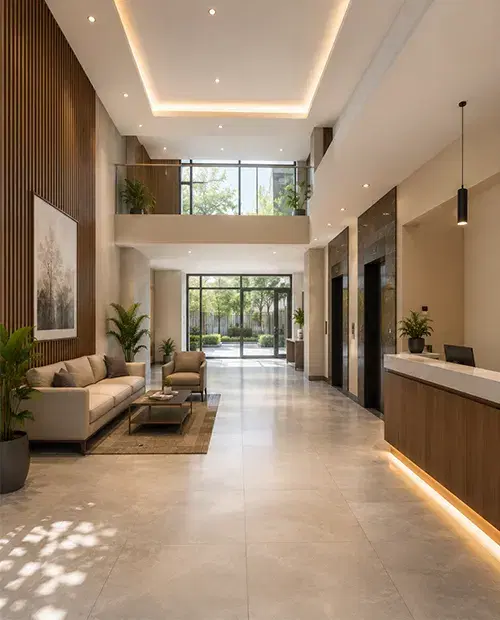
- Non-Strategic Placement Of Kitchen and Toilet Invites Immense Health Problems For All Family Members
- Bedrooms That Are Built In Wrong Direction Leads To Rise In Conflicts and Extreme Emotional Turmoil
- Always Place Indoor Plants At Your Homes As They Create A Positive Aura
- Homes With No Essence Of Vastu Hampers Personal As Well As Professional Bonds
- Pooja Room or Meditation Arena Positioned In Wrong Direction Results In Blocking Of Spiritual Energy
Scientific Vastu
Subscribe on YouTubeMake House Space Vastu Compliant
Featured
Why Choose Us
Why Choose Layered Vastu for House Vastu
100% Certified
Authentic Documents, Showcasing Legality100% Customer-Centric
Customization As Per Client's RequirementLifetime Assistance
Offering Services For The Entire LifespanFAQ
Vastu For House - People also ask
North, east and north east entrances are considered the most supportive, with the north east regarded as the best of them. These directions receive soft morning light and are linked with growth and clarity. A west entrance is workable, and a south entrance is not automatically a defect, though its exact position along the wall matters.
Keep the north east portion the lightest, cleanest and most open part of the home. It should ideally hold the pooja space, the underground water tank or the entrance itself. Avoid placing a toilet, kitchen, staircase or storeroom in this zone.
The south west is the earth corner, associated with weight, stability and rest, which suits sleep and long-term decision making. A master bedroom placed here is traditionally linked with steadier household leadership and better sleep. The bed is usually positioned so the head points south or west.
The south east is the preferred zone for the kitchen, since it is the fire corner. The cook is generally advised to face east while working. Where the south east is unavailable, the north west is the usual alternative. Keep the sink and the stove apart, since water and fire are treated as opposing elements.
The north west and west are the commonly recommended zones for toilets, with the south south west also used in many plans. The north east and the centre of the house are the two positions to avoid. If a toilet already sits in the north east, keep the door shut and ventilate it well.
North and east are the preferred zones for a living room, since these directions bring in light and are associated with movement and opportunity. The north east works well too. Seating is usually arranged so hosts face north or east, with heavier furniture along the south and west walls.
Start with placement rather than objects. Move furniture out of the wrong zones, shift sleeping directions, clear the north east, open blocked windows, repair anything broken, and correct lighting. These steps resolve most issues in an ordinary home. Structural remedies are considered only when a defect cannot be worked around.
Square and rectangular plots are the most favourable, especially those with a north or east road. Plots extended towards the north east are considered auspicious. Triangular plots and plots cut at the north east corner are traditionally avoided, though many can be regularised by fencing the odd portion and building only on the regular part.
Underground water storage, borewells and sumps are placed in the north east, which is the water zone. Overhead tanks go the other way, towards the south west or west, since they add weight and weight belongs in the heavy corners. An overhead tank in the north east is a common defect in completed houses.
Light, reflective shades work best overall: white, ivory, cream, pale yellow, light green and soft blue. Warm earthy tones suit the south west, greens the north and east, and blues the west. Strong reds and deep oranges are better used as accents in the south east than across full walls.
Explore More
Similar Vastu Services
Vastu For Bedroom
Make it Vastu Compliant
Read More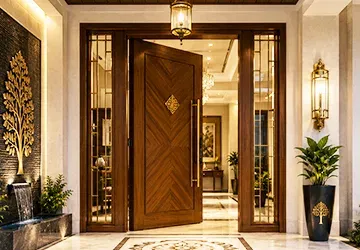
Vastu For Main Home Entrance
Make an auspicious entrance
Read More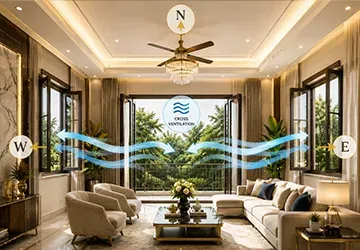
Vastu For Cross Ventilation
Let the fresh air enter your home
Read More
Vastu For Garage
Welcome goodness from the garage
Read More
Vastu For Toilets
Make your living healthy
Read More
Vastu For Villa
Get the beautiful and positive living
Read MoreReady to Transform Your Space?
Get expert Vastu guidance from Seema Bhatia. Start your journey to harmony and prosperity today.