Vastu For Swimming Pool
Swim in Vastu Compliant Pool
12+
Years of Experience
3000+
Satisfied Clients
5+
International Presence
99%
Success Rate
100%
Authenticity And Transparency
Highlights
Swimming Pool Vastu - Direction & Placement
Based on 54 Google Reviews
Accurate Positioning
Invites HarmonyVastu Compliant Pool
Enhances Overall HealthFlow Of Positive Energy
Ideal Direction Enriches Family’s Mental Peace
About
About Vastu For Swimming Pool
Not so long ago, a swimming pool was something you saw at a five-star hotel or a resort, never at home. That has changed. Private pools are now part of villas, farmhouses, penthouses and even mid-sized independent homes, and with that shift comes a question most people never had to ask before: where should the pool actually go? In Vastu Shastra, a pool is not just a luxury or a fitness feature. It is a large, heavy body of water, and water is one of the most powerful and sensitive elements in the whole system. Put it in the right place and the tradition says it pulls in wealth, health and calm. Put it in the wrong place and it is believed to do real damage, draining money, health and peace out of the home. This guide covers the whole thing: what swimming pool Vastu is, why a pool of all things needs this care, the correct direction, the shape, the depth and water flow, the colour, and several things almost nobody writes about, like where to hide the pump and filter, how direction is judged relative to your house, and how Vastu reads modern pools like infinity and plunge designs. By the end you will know how to build one properly, or fix one that is already there.
Vastu Shastra is the old Indian science of arranging spaces in balance with the five elements, earth, water, fire, air and space. A swimming pool is a concentrated dose of the water element, jal tattva, sitting on your property day and night. Swimming pool Vastu is simply the set of rules for where that water sits, how it is shaped, which way it flows, and what surrounds it, so that this heavy water element supports the home instead of unsettling it.
The reason water gets treated with such respect is that it is linked to money, emotions and the flow of life itself. A well-placed water body is thought to keep prosperity and positivity circulating. A badly placed one is thought to create leaks, in finances, in health, in relationships, the same way real water finds the weak point and seeps through. That is the whole idea in one sentence.
Here is something most articles skip, and it is worth being honest about. A swimming pool is a double-edged feature in Vastu. A small, correctly placed water element is gentle and positive. A pool is neither small nor gentle. It is a large mass of water with real weight, and if it lands in the wrong zone, the tradition holds that the harm is bigger precisely because the element is bigger. That is why pool placement is taken more seriously than, say, where you hang a mirror.
There is a grounded logic underneath the belief, too. A pool genuinely changes a home. It shifts the weight distribution of the plot, it changes humidity and drainage, it casts shade, and it becomes the emotional centre of family life in summer. Getting its position, depth and surroundings right matters for engineering and comfort, not only energy. So the Vastu care and the practical care point in the same direction, which is the best kind of guideline to follow.
This is the heart of it, so take your time here.
The single best location is the northeast, the corner Vastu calls Ishan. Northeast is the zone of water and of divine, incoming energy, so a pool here is considered the most auspicious placement of all, tied to prosperity, health, good reputation and general good fortune. If the northeast is not available, the next best options are the north and the east. A pool anywhere along the northeast-to-north or northeast-to-east band is considered excellent.
The directions to avoid are just as important. The southwest is the strict no. Southwest is the zone of earth, weight and stability, the heaviest corner of the home, and filling it with water is believed to undermine the very foundation of the family’s stability, hitting finances and health hard. The south and the west are also discouraged, and the southeast, the fire zone, clashes with water and is linked to conflict and unease. And never put the pool in the dead centre of the property, which is meant to stay light and open.
Now the insight that almost no one explains, and it is the thing that separates a real understanding from a copied checklist. Direction is judged relative to your house and where your family actually lives, not just the raw plot compass. A pool that looks northeast on the site plan can effectively sit in the southwest of the part of the home where everyone gathers and sleeps. Good Vastu consultants begin by asking where the bedrooms and sitting areas are, because that is the reference point. So when you place a pool, think about where it falls in relation to the main living block, not only where it falls on the boundary. This one idea prevents the most common expensive mistake.
A pool belongs on the ground, connected to the earth, because the water element is meant to link with the earth element below it. That is the clean answer, and where you have the choice, put the pool at ground level in the right corner.
Modern homes complicate this. Rooftop and terrace pools are a rising trend in penthouses and compact plots, and they look stunning. Vastu is wary of them, because a heavy water mass sitting above your living space is considered unsettling, and it can add mental, financial and family pressure. Two rules matter most if you go this route. First, a rooftop pool should never sit directly above the master bedroom, which is linked to stress, poor sleep and shaky decisions. Second, and this is a useful nuance the ground-floor rules miss, for a terrace pool the west is often considered a favourable, stabilising placement, which is different from the ground-floor preference for northeast. If you already own a home with a terrace pool, it is worth a proper consultation rather than a guess, because the structural and energetic factors both get complex up there.
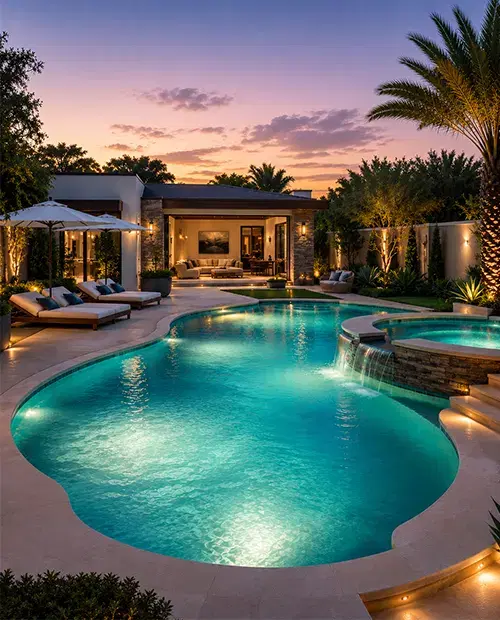
Go for a square or a rectangle. These regular shapes hold balanced, stable energy and are the safest Vastu choice. Circular and oval pools are also considered acceptable, since they suggest continuity and flow. What you want to avoid are irregular outlines, sharp projections, and especially L-shaped or triangular pools, which are believed to scatter energy and invite friction and health niggles.
On size, keep the pool proportionate to the plot. A pool that overwhelms the house or crowds it is discouraged, both because it unbalances the space energetically and because it simply feels wrong to live beside. Leave the home room to breathe around its water.
This is where the detail lives, and where a little logic goes a long way.
Keep the depth fairly uniform, and avoid a dramatic deep end that dwarfs the shallow end, since a big imbalance in depth is thought to unbalance the energy. Where you do have a gradient, the sensible Vastu reading is to keep the deeper, heavier end toward the southwest and the shallower, lighter end toward the northeast, so the weight of the water mirrors the natural weight map of the home, heavy in the southwest, light in the northeast.
Water flow and slope matter too. The internal slope and the flow should carry water toward the north or northeast, the auspicious water zones. In practice, for a pool on the north side the slope runs from west to east, and for a pool on the east side it runs from south to north. Keep the inlet, where fresh water enters, toward the west or the heavier side, and let the outflow and drainage move toward the east or northeast. The principle to remember is simple: fresh water in from the heavier side, movement toward the light northeast.
Colour is not a small detail, and you asked about it specifically, so here is the full picture.
The water in a pool takes its colour from the tiles and the interior finish, and Vastu wants that to read as clean, natural water. Light blues, aqua, turquoise, sea green and white are the ideal tile colours, because they keep the water looking bright, fresh and alive, which is exactly the quality you want from the water element. Soft, light, watery tones support calm and positive flow.
The colour to avoid is black, and dark, heavy shades in general. Dark tiles make the water look deep, murky and heavy, and black is associated in Vastu with negativity and stagnation. A black-bottomed pool might look dramatic in a design magazine, but energetically it is the opposite of what you want from a body of water at home. Keep the surrounds light too, natural stone and pale decking, so the whole zone feels open rather than shadowed.
Here is a section you will not find in most guides, and it matters more than people realise. A pool is not just water. It comes with a pump, a filter, a heater or chlorinator, and often a small machine room, and all of that equipment is heat-producing, mechanical and electrical, which in Vastu terms belongs to fire, not water.
Because it is fire-natured equipment, the logical place for the pump and filter housing is the southeast, the fire zone (Agni), where electrical and heat-producing machinery sits most comfortably. If the southeast is not workable, the south or the heavier southwest edge is a reasonable alternative for the machinery, since it is heavy equipment and the heavier corners suit weight. What you should not do is bury the pump room in the northeast beside the pool’s best energy, or in the delicate north or east zones. Keep the water in the northeast and the machinery that serves it toward the southeast. Getting this split right is one of those quiet touches that separates a properly planned pool from a rushed one.
Another practical piece the checklists ignore. A pool usually needs a changing area, an outdoor shower and sometimes a toilet, and their placement follows its own logic.
Keep the changing room and any toilet out of the northeast at all costs, since that sacred, light corner is reserved for the pure water body itself, not for a dressing room or a bathroom. The southeast, the west or the northwest are more suitable zones for a changing room, a shower or a utility toilet. The rule of thumb is to protect the northeast for the pool and push the supporting rooms, the ones with heat, waste or machinery, toward the south and west sides.
Natural materials are the Vastu preference throughout. Build and finish the pool in tiles, natural stone and eco-friendly materials that echo the earth, and steer away from heavy synthetic or plastic finishes that are thought to block energy flow.
For the poolside, choose furniture in natural materials, wood, bamboo or wrought iron rather than plastic, and set the lounge chairs and shaded seating toward the northeast, north or east so people relax in the good-energy zones. For planting, keep things low and gentle near the water: flowering shrubs and short plants in the north, northeast and east are ideal. Do not plant large trees close to the pool, especially in the southwest, both because their shade and roots disturb the energy and because in real life those roots will crack your pool shell over time. Avoid thorny plants entirely. If your pool sits in a garden, a low boundary wall with flowering plants around it is a pleasant, Vastu-friendly frame.
Good light is treated as good energy, so keep the pool and its surroundings well lit, and pay special attention to keeping the northeast bright, since a dark, shadowed water zone is considered heavy and stagnant. Warm, welcoming lighting around the pool lifts the whole area.
Safety belongs here too, because Vastu at its best overlaps with common sense. Fence the pool, use non-skid surfaces around it, and keep the area free of hazards and clutter. A pool that is safe, clean and easy to move around is also a pool with clean, flowing energy. The two goals are the same goal.
Since private pools now come in many styles, here is how the tradition reads the popular modern ones, which is another angle the older guides never touch.
An infinity pool, with its vanishing edge, works well when that edge and the visual flow face the north or east, carrying the eye and the water toward the auspicious zones. Turn the infinity edge toward the southwest and you are symbolically pouring your stability away, so orientation is everything with these.
A plunge pool or a small cold-plunge is compact and easy to place well, and its small size makes it forgiving. Sit it in the northeast, north or east and it is one of the simplest pools to keep Vastu-compliant.
A lap pool is long and narrow, so let its length run along the north-south or east-west axis and keep it on the northern or eastern side of the plot rather than cutting through the heavy southwest.
An indoor pool needs the same corner logic as an outdoor one, northeast, north or east of the building, plus strong ventilation and light so the enclosed water does not turn the space damp and heavy.
A natural or eco pool, filtered by plants rather than chemicals, actually suits Vastu beautifully, since it leans on living plants and natural materials, just keep the planted filtration zone toward the north or east.
This is the part people forget the day after the pool is built. In Vastu, still, dirty, stagnant water is not neutral, it is actively negative. A green, neglected pool becomes a pool of heavy, stuck energy sitting in your home, which is worse than no pool at all. So maintenance is not just hygiene, it is energy work. Keep the water clean, keep it moving and filtered, change or treat it regularly, and never let the pool sit stagnant and unused for long stretches. If you travel or the pool goes unused in winter, keep it covered and clean rather than letting it turn. A sparkling, moving pool is the whole point. A murky, forgotten one quietly works against the home.
Plenty of people buy or inherit a home with a pool in a difficult spot, so do not panic if yours is not textbook. There are recognised remedies, and while nothing beats correct placement, these genuinely help.
- For a southwest or heavy-zone pool, reintroduce the earth element around it. Terracotta pots, large natural stones, heavy sculptures and earthy planters near the pool help offset the misplaced water with grounding weight.
- Keep the northeast of the property bright, clean and well lit to strengthen the good zone even if the pool sits elsewhere.
- Use a pool cover when the pool is not in use, which caps and calms a badly placed water mass.
- Where a pool sits too close to the building on a wrong side, a partition, a screen or some separation between the water and the living block softens the effect.
- For a west-side pool, placing a reflective surface or mirror on the east side is a traditional correction to redirect energy.
- Add the plants, the light and the clean-water discipline described above, since a well-kept pool in a wrong spot still beats a neglected one.
For a serious mismatch, especially a large or terrace pool, this is the one situation where paying an experienced Vastu consultant is worth it, because the fix has to be judged against your specific layout.
If you want the essentials at a glance, here they are.
- Place the pool in the northeast, or else the north or east. Never the southwest, south, west, southeast or centre.
- Judge the direction relative to your main living block, not just the plot boundary.
- Prefer ground level over terrace or rooftop.
- Choose a square, rectangular, oval or round shape. Avoid L-shaped, triangular and irregular pools.
- Keep depth fairly even, deeper end toward the southwest, shallow toward the northeast.
- Slope and flow the water toward the north or northeast.
- Pick light blue, aqua, green or white tiles. Avoid black and dark finishes.
- Put the pump, filter and machinery toward the southeast, away from the northeast.
- Keep changing rooms and toilets out of the northeast.
- Use natural materials, low plants in the north and east, no large or thorny trees.
- Keep it lit, fenced, clean and always moving.
A swimming pool is one of the few home features where Vastu and hard practicality line up almost perfectly. Put the water in the northeast, keep the machinery in the southeast, choose light tiles, keep the shape regular, mind where it falls relative to your home, and above all keep it clean and moving, and you have a pool that a Vastu shastri and a civil engineer would both approve of. A pool is a big, permanent, expensive thing to get wrong, so it rewards a little planning up front more than almost anything else in the house. Plan it well, maintain it honestly, and it becomes exactly what people hope a home pool will be: a source of health, joy and calm rather than a worry sitting in the yard.
Benefits
Benefits of Correct Swimming Pool Vastu
Enhancing Good Health
Smooth Flow Of Energy
Welcoming Joy
Harmonious Relationship
Vastu Tips
Important Tips & Points of Swimming Pool Vastu
POINTS TO BE TAKEN UNDER CONSIDERATION
- Consistent Flow Of Wealth Occurs If Your Swimming Pool Is Positioned Accurately.
- Swimming Pool At Your House Should Never Built Centrally.
- It Is Advised To Appoint Experts As You Decide To Build A Swimming Pool To Make It 100% Vastu-Centric.
Why Choose Us
Why Choose Layered Vastu for Swimming Pool Vastu
100% Certified
Authentic Documents, Showcasing Legality100% Customer-Centric
Customization As Per Client's RequirementLifetime Assistance
Offering Services For The Entire LifespanFAQ
Vastu For Swimming Pool - People also ask
The northeast, the Ishan corner, is the best, followed by the north and the east. Avoid the southwest, south, west, southeast and the exact centre of the property.
The southwest is the zone of earth, weight and stability, the anchor of the home. Filling it with a heavy water mass is believed to undermine that foundation and hit the family’s finances and health. It is considered the single worst spot for a pool.
It is not ideal, because water is meant to connect with the earth below, and a heavy pool above living space can add pressure. If you must have one, never place it above the master bedroom, and the west is often considered a more stabilising position for a terrace pool. A consultation is wise for rooftop pools.
Light, watery tones: light blue, aqua, turquoise, sea green or white tiles that keep the water looking clean and fresh. Avoid black and dark tiles, which make the water look heavy and are linked to negativity.
Square and rectangular are the safest, with oval and round also acceptable. Avoid L-shaped, triangular, sharply projecting or irregular pools.
The machinery is heat-producing and fire-natured, so the southeast, the fire zone, suits it best, with the south as a fallback. Keep it out of the northeast, north and east, which belong to the water and to good energy.
Yes, to a degree. Use earthy elements like terracotta and stones around a misplaced pool, keep the northeast bright and clean, cover the pool when unused, add a partition where needed, and keep the water spotless and moving. Correct placement is still best, but these remedies help.
Yes. Stagnant, murky water is treated as heavy, negative energy. A neglected pool can be worse than no pool at all, so keeping the water clean, filtered and moving is a core part of pool Vastu, not just maintenance.
Explore More
Similar Vastu Services
Vastu For Bedroom
Make it Vastu Compliant
Read More
Vastu For Main Home Entrance
Make an auspicious entrance
Read More
Vastu For Cross Ventilation
Let the fresh air enter your home
Read More
Vastu For Garage
Welcome goodness from the garage
Read More
Vastu For Toilets
Make your living healthy
Read More
Vastu For Villa
Get the beautiful and positive living
Read MoreReady to Transform Your Space?
Get expert Vastu guidance from Seema Bhatia. Start your journey to harmony and prosperity today.