
Key Takeaways at a Glance
- Gen Z reframed Vastu as a wellness tool, not a rulebook. India TV (June 2026) documents young users adopting it "for mental peace, not just home design."
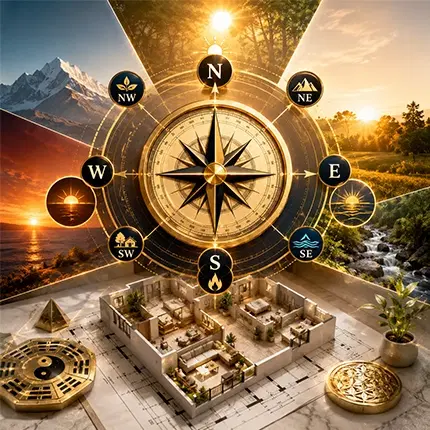
- Vastu works from five elements (Prithvi/earth, Jal/water, Agni/fire, Vayu/air, Akash/space) mapped across eight directions, using the same framework in classical texts like Manasara and Mayamata.
- The north-east (Ishanya) is classically the zone of light and clarity; texts keep water and prayer here and steer heavy or heat functions away from it.
- Environmental-psychology research links Vastu-friendly cues to measurable calm: natural light lowers cortisol, and biophilic elements reduce heart rate and stress (ScienceDirect, 2019).
- A review of Maharishi Vastu Architecture (Global Advances in Health and Medicine, 2022) reported occupants sleeping better and feeling less stressed. Promising, but not proof of specific direction rules.
- Most calming Vastu moves need no renovation: light, airflow, and a clutter-free layout do the heavy lifting for renters and small flats.
What Gen Z Actually Changed About Vastu
The shift is not about belief. It is about framing. Older Vastu guidance arrived as instruction: face this way, avoid that corner, or invite misfortune. Younger users find that tone hard to trust. So they reinterpret the same rules through a question they already ask about everything else: does this help me feel better?
That reframing is well documented. Speaking to India TV in 2026, Gurudev Vikrant Jain of the Indian Institute of Vedic Science said Gen Z is interested in Vastu "not only for organising living spaces but also for creating a peaceful environment that supports mental health." The same reporting ties the surge to stress, social-media pressure, and cramped rentals where a bedroom doubles as office, gym, and sleep space.
Read that way, Vastu for mental health stops being fortune-telling and becomes something closer to spatial hygiene with a direction map attached. You can test it against how a room makes you feel. That testability is exactly why it travels well on reels and why it survives contact with a skeptical 22-year-old.
It also changes what counts as success. A calmer sleep, a clearer head at your desk, less dread walking into your own flat. Those are the outcomes this generation cares about. If you want the whole-home version of this read, our vastu for house guide walks through every room in the same practical spirit.
The Five Elements, Read as a Mental-Health Map
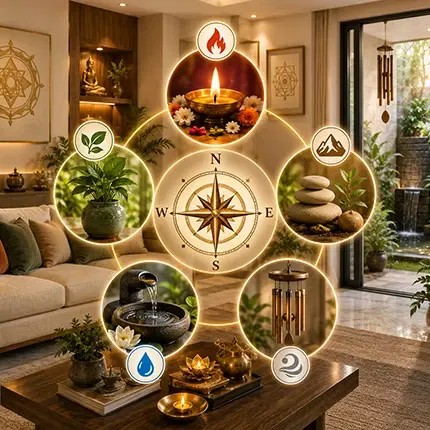
Classical Vastu is built on the pancha bhoota, or five elements, distributed across eight directions. This is not decoration theory. Texts such as Manasara and Mayamata treat orientation as a way to balance earth, water, fire, air, and space inside a dwelling. When one element dominates or sits in the wrong zone, the tradition describes the space as unsettled.
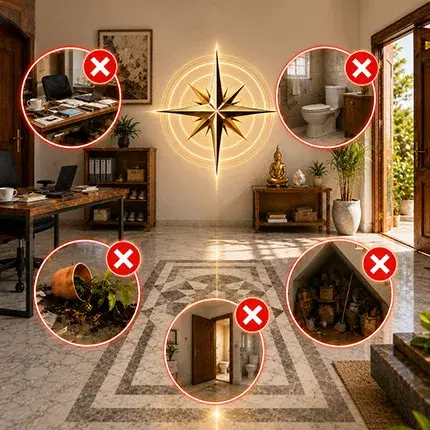
The north-east corner, called Ishanya, carries the most weight. Classical sources place light, water, and prayer here and keep kitchens and toilets out of it. Contemporary practitioners read the same rule as a mental-clarity zone: keep it open and bright, and the room feels lighter to think in. A toilet here is the classic problem case, which we cover in our Bathroom Vastu Guide and in the walkthrough for a Vastu for House Facing North-East
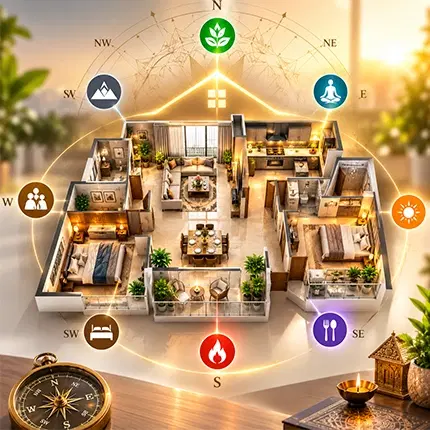
The centre, the Brahmasthan, is meant to stay uncluttered - the room's breathing space. Fire belongs to the south-east, which is why kitchens sit well there. Sleep guidance favours the head pointing south or east. Some of this is classical injunction; the magnetic-alignment explanation you see online for the south-facing head is practitioner interpretation, not something the old texts claim.
| Element | Direction | What it governs | Calm-space cue |
| Space (Akash) | North-east / centre | Clarity, openness, rest | Keep the north-east and centre light and uncluttered |
| Water (Jal) | North-east | Reflection, calm, flow | Water features or prayer here; never a toilet |
| Air (Vayu) | North-west | Movement, breath, sleep | Prioritise cross-ventilation and fresh air |
| Fire (Agni) | South-east | Energy, digestion, drive | Kitchen and strong light belong here, not the north-east |
| Earth (Prithvi) | South-west | Stability, grounding | Heaviest furniture and the master bed sit best here |
Notice what the map is really doing. It pushes light and air toward where you rest and think, and heat and weight toward where you cook and sleep deeply. Whether or not you accept the metaphysics, the layout it produces is one most designers would call sensible.
Where Tradition and Environmental Psychology Actually Agree
Here is the part the trend gets right without always knowing why. Several core Vastu cues line up with findings from environmental psychology, the study of how spaces affect mood and behaviour.
Light is the clearest example. Vastu obsesses over morning light in the east and north-east. Research on natural light finds it helps regulate circadian rhythm and is associated with lower cortisol, the body's main stress hormone. A 2019 study on biophilic indoor environments reported measurable drops in stress and anxiety when rooms brought in daylight, plants, and natural materials.
Clutter is the second. Vastu treats a blocked, crowded space as stuck energy. Environmental-psychology work links visible clutter at home to higher measured cortisol, especially for women. Different vocabulary, same direction of travel: a crowded room taxes the mind.
Airflow, greenery, and a dedicated calm corner round out the overlap. A review of Maharishi Vastu Architecture published in Global Advances in Health and Medicine (2022) found that people living in homes built to these principles reported better sleep, less stress, and a stronger sense of security. It is a review of self-reported outcomes, not a controlled trial isolating direction - worth reading with that caveat.
We tell every young client the same thing: you are not decorating for calm, you are removing what drains you. Vastu simply tells you where to look first.
Where They Don't: Being Honest About the Evidence
Source discipline is the reason our readers trust us, so here is the honest boundary. No peer-reviewed study has isolated a compass direction and shown it changes mental health on its own. When India TV ran its own Gen Z Vastu feature, it closed with a plain disclaimer: the guidance rests on tradition and belief, not scientific proof. We agree with that framing.
The mechanism most likely at work is ordinary and well evidenced. Light, air, order, and nature calm the nervous system. Vastu is a memorable, centuries-old system for arranging those things. It is a delivery method, not separate magic. That is a strength, not a weakness, and it is the line we hold in our Debunking Vastu Myths piece as well.
So treat direction rules as a starting layout, not a medical claim. If a south-west bed and an open north-east help you sleep and think, keep them. If your flat cannot follow the map, you have lost nothing that evidence says you needed. Confusing a cultural framework for a cure is where the harm creeps in, through anxiety, overspending, or guilt about a rented layout you cannot change.
A Calm-Room Method for Renters and Small Flats
Most Gen Z readers rent. The good news is that the highest-impact moves need no construction. This is the same non-invasive approach we use in consultations. Work in this order:
- Open the light. Clear whatever blocks your east and north-east windows first. Morning light is the single cue with the strongest research behind it.
- Clear the north-east and centre. Move shoe racks, bins, and storage piles out of these zones. Empty space here is the point, not wasted room.
- Fix the bed and desk. Aim the head south or south-west for sleep; face a wall or window with your back supported at the desk.
- Add air and green. Cross-ventilate daily and add one or two low-care plants - money plant, snake plant, peace lily.
- Make one calm corner. A single uncluttered spot for stillness or prayer does more for the mind than redecorating the whole flat.
For a focus-friendly workspace inside a bedroom, our Vastu tips for the work desk go deeper, and the full non-demolition None of this asks you to believe anything. It asks you to notice whether the room feels easier to be in afterward. That test - does this help me feel better, is the one Gen Z brought to Vastu, and it is a good one.
What We See When Young Clients Ask for a Calmer Room
Most of our younger consultations now open the same way. Not "will this bring money," but "why do I feel restless the moment I get home." That question tells us more than any floor plan. It means the person is already reading their space the way Vastu intends, as something that acts on the mind.
Nearly always, the fix is subtraction, not construction. A blocked north-east window. A desk buried under everything the person owns. A bed jammed against a wall so airflow dies at night. We move a few things, open what is closed, and ask them to sit with it for a week before spending a rupee. That is the honest version of Vastu for mental health. Not a promise of luck. It is a way to find what is quietly draining a space and let it breathe again.
“Calm is not something you add to a room. It is what is left once you clear what was fighting you in it.”
The Takeaway
Gen Z did not revive Vastu by believing harder; they revived it by asking whether it helps them feel better.
- Treat Vastu for mental health as spatial hygiene with a direction map, testable by how a room makes you feel, not by luck.
- Follow the elements where evidence agrees: morning light, airflow, greenery, and a clutter-free north-east and centre.
- Keep the honest boundary. No study proves a direction alone heals the mind; credit the calm environment it builds.
- If your flat cannot match the map, change what you can and lose nothing evidence says you needed.
If you want a room-by-room read of your own space, a LayeredVastu audit maps what is helping and what is quietly draining you, starting with the changes that cost nothing.
FAQ
Frequently Asked Questions
Vastu for mental health means arranging your home so light, air, and order support a calmer mind, rather than chasing luck. You treat direction rules as a starting layout you can test by how each room makes you feel, keeping what genuinely helps you relax.
Gen Z adopts Vastu as a wellness tool for stress, not a spiritual rulebook. India TV reported in June 2026 that young people use it "for mental peace, not just home design," drawn by affordable, practical changes they can make even in small rented rooms.
The north-east, called Ishanya, is classically the zone of light and clarity, so keep it open and bright. For sleep, tradition favours pointing your head south or south-west. Test both against your own rest and focus rather than treating either as a strict command.
Vastu can help indirectly by encouraging natural light, airflow, and clutter-free rooms, which research links to lower cortisol and calmer moods. No study proves a compass direction alone changes mental health, so credit the environment it creates, not the direction itself.
Classical texts like Manasara and Mayamata map five elements across eight directions to balance a dwelling. They place light, water, and prayer in the north-east and keep the centre open. The link to mental clarity is how modern practitioners read those older spatial rules.
Yes. Most calming Vastu moves need no construction, which suits rentals and small flats. Open blocked windows, clear the north-east and centre, adjust your bed and desk, and add a plant. Our non-invasive Vastu guide covers the full no-demolition method step by step.
Yes. Most calming Vastu moves need no construction, which suits rentals and small flats. Open blocked windows, clear the north-east and centre, adjust your bed and desk, and add a plant. Our non-invasive Vastu guide covers the full no-demolition method step by step.
Choose soft, low-stimulation shades: cream, beige, pastel blue, or muted green. Vastu links these to water and space elements associated with rest, and colour psychology agrees calmer tones lower arousal. Avoid intense reds near the bed, which tradition ties to the restless fire element.
The supporting science is indirect. Studies on natural light, biophilic design, and clutter connect Vastu-friendly cues to reduced stress and better sleep. A 2022 Maharishi Vastu review reported calmer, better-rested occupants, though it measured self-reported outcomes rather than isolating specific directions in a controlled trial.
Vastu treats clutter as blocked, stagnant energy that weighs on the mind. Environmental-psychology research echoes this, linking visible household clutter to higher measured stress hormones. Clearing cupboards and floors is the cheapest, fastest Vastu change you can make, and usually the one people feel most.
Position your desk so your back is supported by a wall and you face into the room or a window, ideally catching north-east or east light. Keep the surface clear. Our Vastu tips for the work desk explain seating direction and layout for concentration in detail.
No. Renovation is rarely the first step and often unnecessary. Light, airflow, furniture placement, and decluttering deliver most of the calming effect without construction. Only structural problems, like a toilet in the north-east, may need bigger fixes, and even those have non-invasive workarounds worth trying first.
Vastu is an architectural system, not a religion, though it grew from Vedic culture. Gen Z increasingly treats it as design guided by the five elements. You can apply its light, air, and layout principles for a calmer home without adopting any religious belief at all.
Open your east and north-east to morning light and clear whatever blocks it. Natural light has the strongest research support of any Vastu cue for mood, sleep, and stress. If you do only one thing, let more morning light into the rooms where you rest.
Watch for signs like restlessness at home, poor sleep, a cluttered or dark centre, or a toilet in the north-east. If simple light, air, and layout changes do not shift how a room feels, a professional Vastu audit can map what is off more precisely.
Related Posts




Ready to Transform Your Space?
Get expert Vastu guidance from Seema Bhatia. Start your journey to harmony and prosperity today.