
Why Your Home Office Feels "Off"
Many of us working from home in India face the common challenge of staying focused and productive. You may have the perfect setup, but still feel that something is "off" that your efforts aren't leading to the success or stability you desire. This feeling of being stuck or drained in your own workspace is a frequent complaint, leaving many professionals wondering what they can do to improve their work life.
The answer may lie in Vastu Shastra, an ancient science of architecture and energy alignment. Vastu isn't about strict rules or expensive makeovers. It's a practical way to set up your space so it works in your favour. With a few simple changes, your Home Office Vastu Tips can support better focus, higher productivity and steady career growth. This guide walks you through easy, actionable Vastu tips to help create a workspace that promotes success.
Best Vastu Direction for Office Spaces
The location of your home office is the most critical first step in aligning your workspace with positive energy. Even if you can't dedicate an entire room, you can apply these principles to a specific corner of your home.
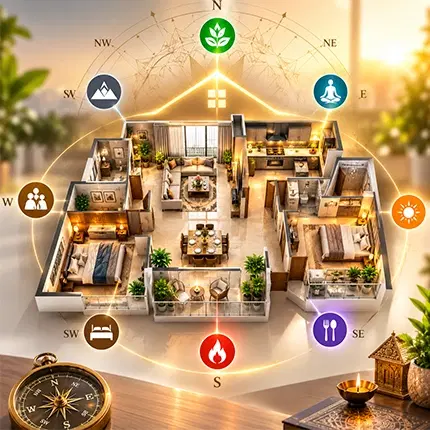
- The Ideal Zone - South-West (SW): This is the zone of stability and control governed by the Earth element (Prithvi Tatva). Working here helps establish you as a stable, powerful professional, giving you a strong command of your work.
- For Gains and Profits - West: This is a strong alternative to the South-West. The West direction is the zone of financial gains and profits, making it an excellent choice for any professional.
- For Skill Development - South of South-West (SSW): This zone is ideal for those in creative fields or any role that requires continuous learning and skill enhancement. It supports your ability to improve and master your craft.
- For Boosting Energy - South-East (SE): If you often feel lazy, low on energy, or unmotivated, this is the zone for you. The South-East is the direction of fire (Agni) and provides a powerful boost in vitality to help you complete your work.
- For International Connections - North-West (NW): This zone is highly beneficial for professionals who deal with international clients or those who wish to travel abroad for work opportunities.
Vastu Tips for Office Desk: Ideal Sitting Position to Attract Success
Once you've chosen the correct zone, your physical setup within that space is the next priority. How you position yourself can dramatically influence your focus and authority.
Desk and Chair Setup
- Your Desk: Place your desk in the southwest corner of your chosen room. A wooden table is highly recommended, as it is believed to yield better productivity and more positive results. Crucially, when you place your desk here, you must ensure the North and East zones of the room remain well-lit and as free of heavy furniture as possible. Failing to do so can cause an "energy reversal" that negates the benefits.
- Your Chair: Always use a high-back chair. A high-back chair supports your body during long working hours, helps maintain healthy blood circulation, and creates a sense of stability,making it easier to stay focused and work more efficiently."
The Right Direction to Face
The direction you face while working significantly impacts your mindset, creativity and professional growth.
- North-East (For New Ideas): This is considered the best direction for overall growth, creativity and achieving maximum concentration. Facing North-East helps generate fresh ideas and a clear vision.
- North (For Better Communication): Facing North enhances your intelligence and communication skills. This direction is the zone of Mercury (Budh), the planet of communication, making it ideal for roles that require clear articulation and intellect.
- East (For Recognition): Facing east the direction of the Sun, helps build strong social connections and gain recognition for your hard work. It promotes visibility and helps your efforts get noticed.
Energize Your Desk: Simple Vastu-Approved Items
A clean, well-organized desk that is arranged according to Vastu principles can attract positive energy and support your daily tasks. Placing items in their correct elemental zones on your desk can make a subtle but powerful difference.
Essential Items:
- Electronics (Lamp, Phone): Place any electronic items in the South-East corner of your desk, aligning with the fire element.
- Stationery (Pens, Files): Keep these items in the North or North-East section of the desk to support clarity and organization.
- Laptop: Ideally, your entire working position should have you facing North or North-East. If this is not possible, as a secondary option, position your laptop so that its screen faces North.
- Water Bottle: Always keep your water bottle in the North corner of the table. This places water in its natural "water zone," which helps promote emotional balance and supports financial inflow.
Energy Boosters:
- A Green Plant: Placing a small green plant on your desk represents growth. If your role requires excellent communication and you're already facing North (the zone of Mercury), you can further amplify this energy by placing a small green plant on your desk to strengthen Mercury's influence.
- Symbols of Progress: Symbols like running horses can be placed on your desk to represent forward momentum, hard work, and the drive to keep moving ahead without stopping.
Setting the Mood: Vastu for Colors and Lighting
The ambient environment of your home office, including its colors and lighting, plays a crucial role in setting the tone for focus and productivity.
The Best Color Palette
Using light, neutral colors on the walls of your home office vastu tips helps create a calm and focused atmosphere, preventing distractions.
- Recommended: Off-white, cream and other light, muted tones are ideal. A light blue can also be used to create a soothing environment.
- To Avoid: Dark colors like black and grey should be avoided. They can be jarring or create a heavy, unproductive energy, especially for those with unfavorable Saturn or Mars placements in their birth chart.
Optimal Lighting
Proper lighting is essential for maintaining mood and productivity. Vastu recommends a balanced mix of light sources. Use a combination of white and yellow light in your office. White light is associated with the Moon and brings stability, while yellow light is associated with Jupiter and promotes wisdom.
Common Home Office Vastu Mistakes (And How to Fix Them)
Sometimes, the problem isn't what you're missing, but what's already there. Avoid these common Vastu mistakes to maintain a positive and productive workspace.
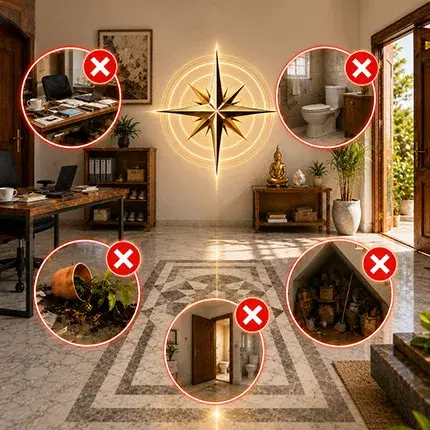
- Sitting Under a Beam or Staircase: This position creates unnecessary pressure because the gravitational pull is very high, which can lead to stress or health issues like migraines.
- A Cluttered Workspace: Clutter in the office leads to a cluttered mind because it disrupts the "space element" (Aakash), which governs mental clarity and obstructs the free flow of positive energy.
- Sitting with Your Back to the Door: This can create a feeling of instability and subconscious vulnerability, as you cannot see who is entering the room. This lack of security can disrupt your concentration.
- Sharp Corners Pointing at You: Adjust your furniture so that no sharp edges or corners are aimed directly at your seating position. These "poison arrows" can create negative, piercing energy.
- Neglecting the Center of the Room (Brahmastan): The center of your office is its energetic heart. Keep this area, the Brahmastan, as open, light, and uncluttered as possible to allow positive energy to circulate freely.
- Placing the Dustbin Incorrectly: The dustbin should only be placed in the North-West corner of the room or under the desk in the North-West zone. Placing it elsewhere can disrupt the room's energy balance.
Conclusion
Vastu Shastra Consultant in India is a logical system for creating a positive and supportive environment, that aligns with your professional aspirations. It empowers you to take control of your workspace and transform it into a hub of productivity. By making these small, practical changes from choosing the right direction to clearing the clutter you can create a home office that not only looks good but also fosters productivity, growth and overall well-being.
FAQ
Frequently Asked Questions
Facing north or east while working is recommended to enhance productivity, decision-making, and positive energy flow.
The north, east, or north-east direction is considered ideal, as it supports focus, clarity, and career growth.
Yes, but the work desk should be separate from the bed, preferably placed in the north or east zone, to avoid mental fatigue.
Light shades of green, blue, beige, or off-white are ideal as they promote calmness, creativity, and concentration.
Avoid sitting under beams, facing a blank wall, clutter around the desk, or placing the office in the south-west corner without guidance.
Related Posts









Ready to Transform Your Space?
Get expert Vastu guidance from Seema Bhatia. Start your journey to harmony and prosperity today.