
12+ years of Experience
- 3000+ Satisfied Clients
- 5+ International Presence
- 99% Success Rate
- 100% Authenticity And Transparency
Why Factory Vastu Is Not the Same as Home Vastu
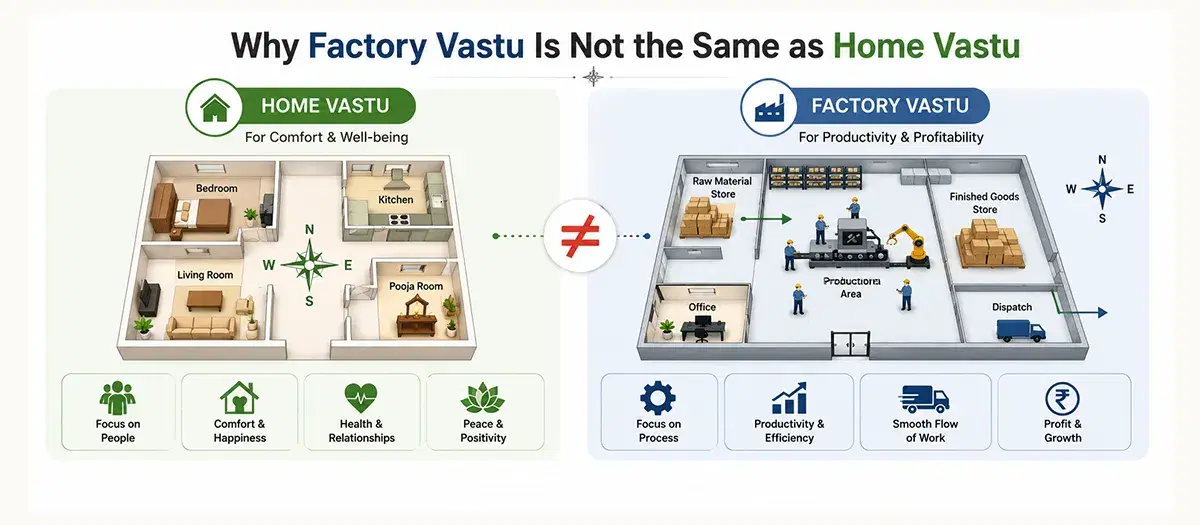
If you have read about Vastu for a house (layeredvastu.com/residential-Vastu-expert/Vastu-for-house), you already know that residential Vastu focuses on peace, health, and family harmony. The logic is centred on rest, privacy and nourishment.
A factory is the opposite. It's a space of output, movement and mechanical intensity. The priorities shift completely:
- Flow replaces stillness
- Production zones replace rest zones
- Heavy energy must be managed, not quieted
This is why applying home Vastu principles directly to a factory never works. Industrial Vastu is its own discipline. The compass directions still matter, but what you place in each zone, and why, is entirely different.
The North Indian Factory Problem: What We Keep Seeing
Seema Bhatia, principal consultant at Layered Vastu, has worked with manufacturing units across Delhi NCR, Haryana and western Uttar Pradesh. One pattern keeps coming up.
In factories where heavy machinery presses, lathes, and boilers have been placed in the northeast or east zones, breakdown frequency is disproportionately high. These are not coincidences of poor maintenance. The same machines, moved to the southwest or south zones, show dramatically better run times. The reasoning isn't mystical. The northeast is associated with lighter, more receptive energy, the water element, low pressure and calm orientation. Placing high-vibration, high-heat equipment there creates an imbalance that the space can't absorb. The equipment works against the directional field rather than with it.
Simple directional shifts repositioning the heaviest machinery to the southwest, ensuring the production flow moves from east to west or from north to south, have shown measurable improvements in output across units. Not because of belief. Because the physical logic of space, orientation and the movement of energy was restored.
The Eight Zones and What They Mean for a Factory
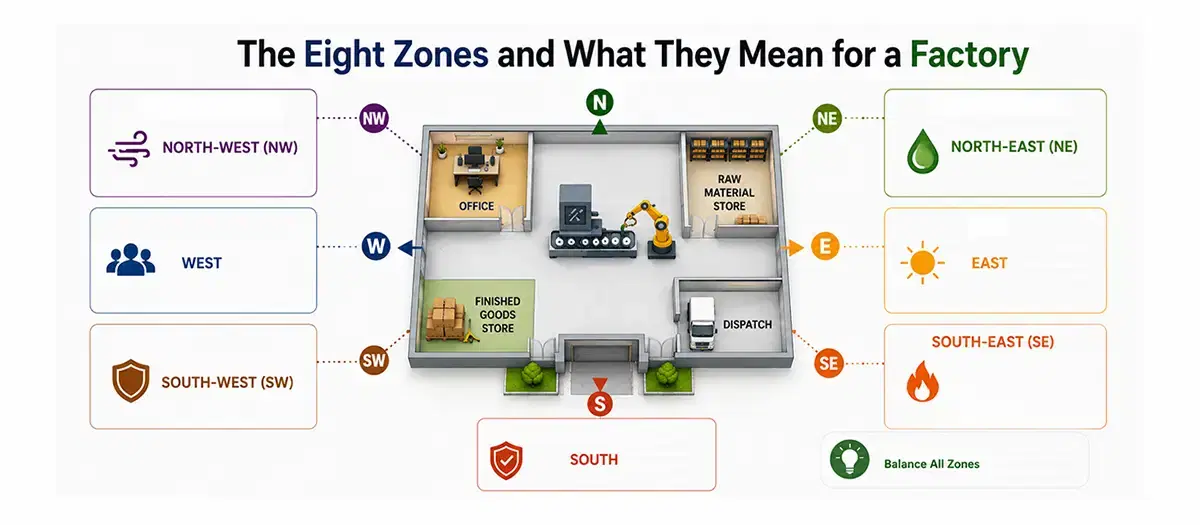
Every factory layout, when overlaid with a Vastu grid, divides into eight primary directions plus the centre. Here's how each zone should typically be used in an industrial space:
North - Administration and Commercial Flow
Ideal for administrative offices, accounts and finished goods storage. The north is associated with commercial flow and wealth energy. Keeping financial and administrative work here supports business momentum.
Northeast - Keep It Light and Open
Keep this zone uncluttered. Water storage, a small prayer area or simply a clear space. Heavy equipment or toilets in the northeast consistently create problems across the factories we have observed.
East - Worker Entry and Natural Light
Entry for workers, natural light and ventilation. The east is associated with solar energy and beginnings - a good zone for locker rooms, time office, or the main worker entrance.
Southeast - The Fire Zone
The correct placement for electrical panels, generators, boilers, furnaces and any heat-generating equipment. Many factories in Delhi and Faridabad that struggled with electrical faults had their panels placed in the north or northeast - moving them southeast resolved the instability.
South - Raw Material Storage
Storage for raw materials and heavy inventory. The south absorbs weight well. Placing your heaviest stores here reduces the pressure on other zones.
Southwest - The Anchor Zone
This is where the owner's cabin or senior management should sit in any attached office. It's also correct for the heaviest machinery on the production floor. The southwest holds weight physically and energetically.
West - Finished Goods and Dispatch
Finished goods, packaging and dispatch. The West supports completion and outward movement, making it naturally suited to the final stages of your production cycle.
Northwest - Raw Material Intake and Vendor Zone
Ideal for raw material intake, vendor interaction and loading bays. The northwest governs movement and change - goods coming in and going out align with this directional quality.
Centre (Brahmasthan) - Keep It Clear
Keep it open. This is the single most violated principle in Indian factory layouts. Placing a pillar, machine or storage unit in the dead centre of the floor creates blockages that spread throughout the space. Leave it clear.
Factory Entrance Direction: It Matters More Than You Think
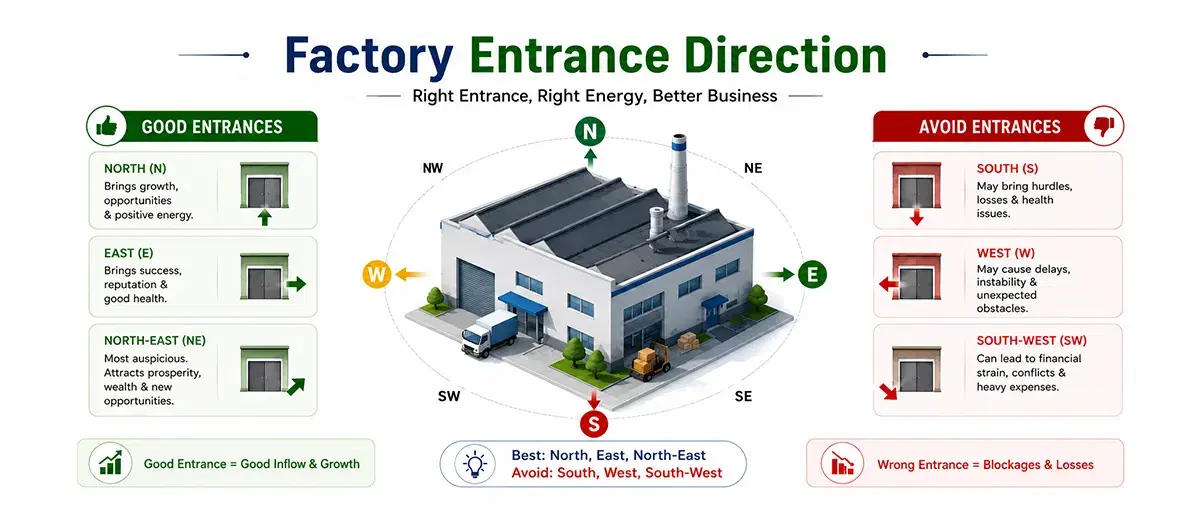
The entrance to your factory - both the main gate and the production hall entry - is where the first energy exchange happens between your space and the outside world. Getting this wrong can affect everything downstream. The north and east are generally the most productive directions for a factory entrance. Both bring in positive, active energy - north for commercial prosperity, east for energy and vitality.
South-facing or southwest-facing entrances need specific corrections. They don't automatically mean failure, but without the right compensating adjustments, pathway treatment, threshold placement and guard positioning, they create an energy leak that shows up as cash flow pressure or high worker attrition. The key is that your entrance direction sets the base orientation for everything else. If the grid is off from the start, internal corrections have limited effect.
Machine Placement Vastu: The Practical Logic
The most common and most damaging mistake in Indian factories is placing machinery wherever it fits, driven purely by floor space and wiring access. Vastu for machine placement asks a different question: what directional energy does this machine generate, and where should that energy be absorbed? Heavy machines with high vibration and heat output belong in the south and southwest. Medium-weight equipment can be placed in the west or south. Light assembly, finishing, or precision work belongs in the east or north.
The production flow itself should move in a logical directional arc, typically entering raw material from the northwest, processing moving south or southwest and finished goods exiting from the west or north. When material flow fights the directional grid, you see congestion, error rates, and fatigue that no ergonomic consultant can fully explain.
One textile unit near Karol Bagh had its finishing tables in the southwest and its heavy fabric-cutting machines in the northeast. Swapping the zones, heavy cutting in the southwest, light finishing toward the east, resolved both worker fatigue complaints and machine misalignment issues within two months.
Worker Zones and Welfare Areas
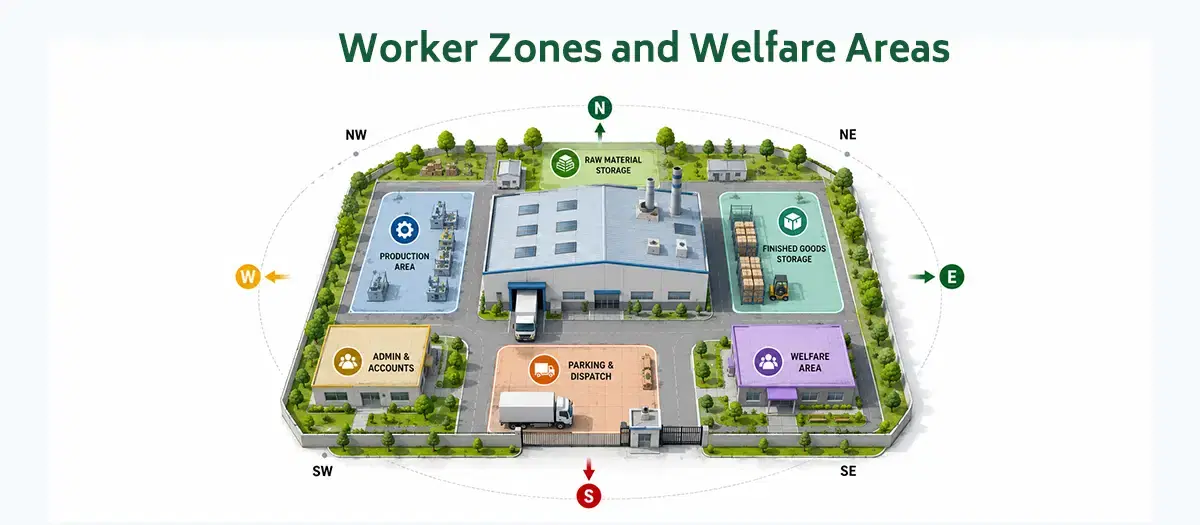
Vastu for factory layout extend beyond machines. Where your workers sit, rest and eat affects their state of mind and output.
A worker seated on the production floor should ideally face east or north. Facing west while working can create dull or resistant energy, slower production, more errors and less initiative. Canteen and rest areas belong in the northwest or west. These are zones associated with movement and transition; people cycle through them, rest briefly and return to work. Placing the canteen in the southwest makes workers feel so comfortable that they linger. Supervisors and line managers should sit facing north while overseeing the floor. This positioning supports decision-making and authority flow.
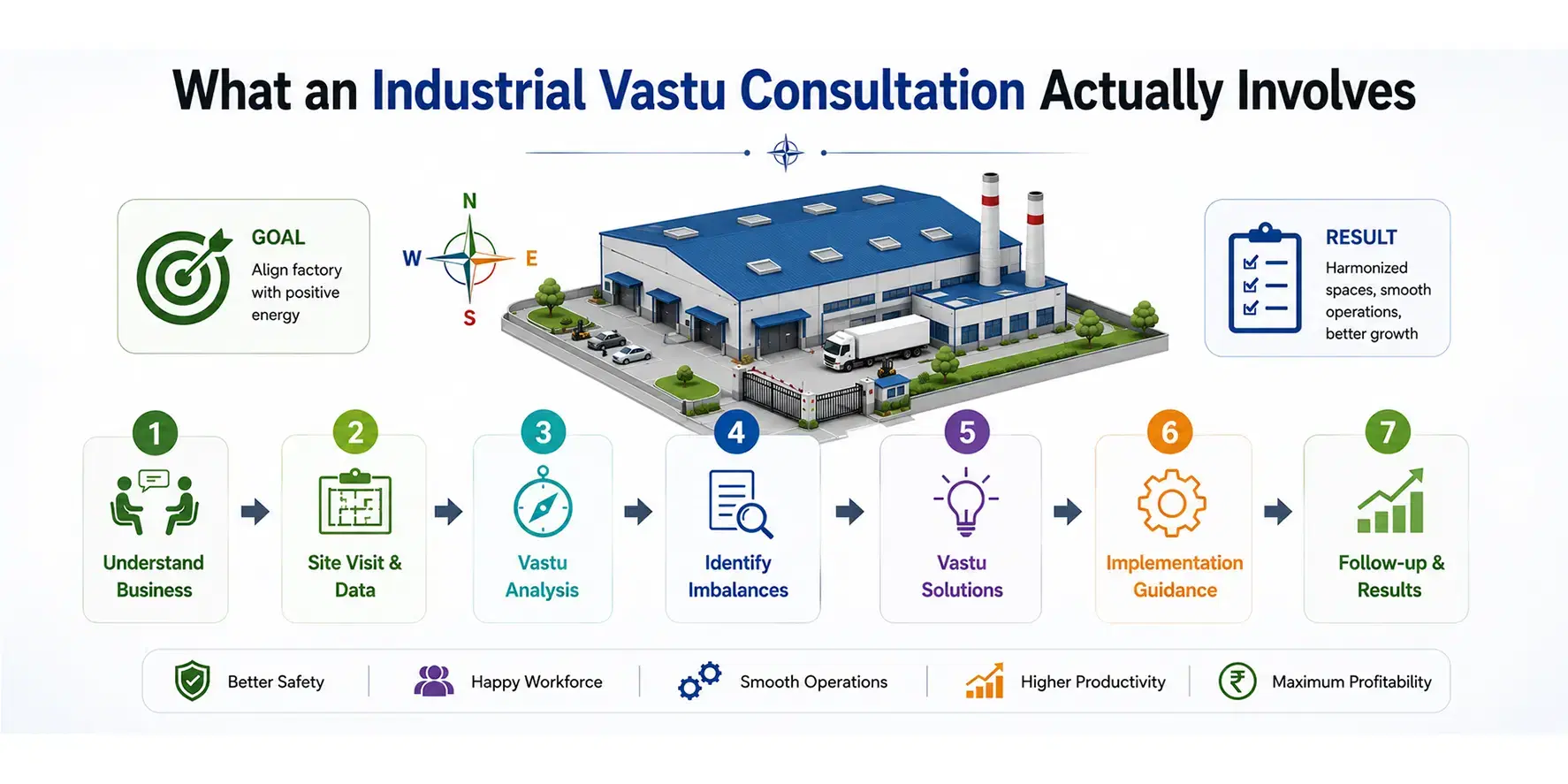
What an Industrial Vastu Consultation Actually Involves
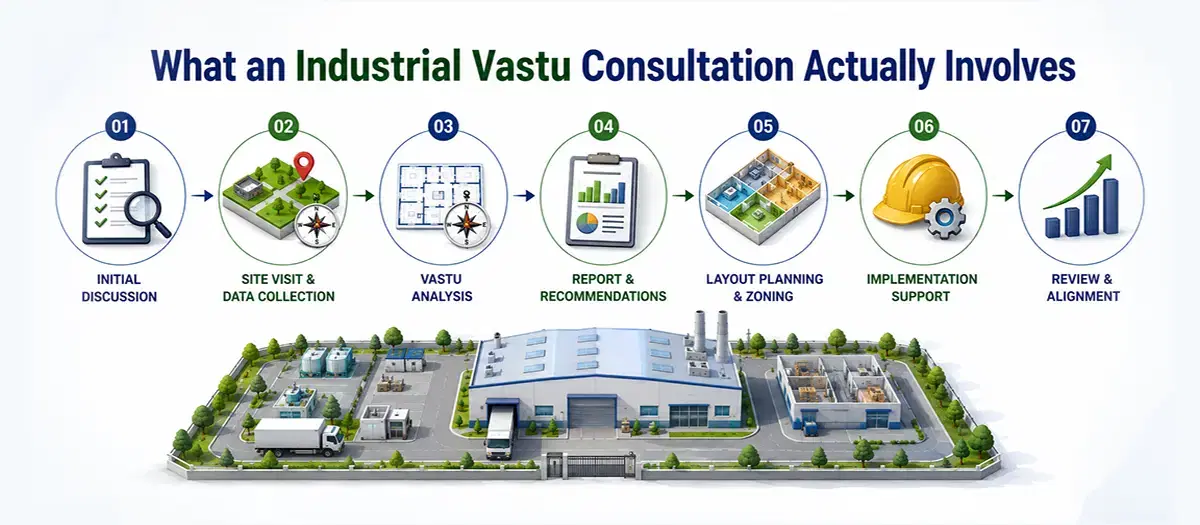
An industrial Vastu consultation for a factory is a structured, site-specific process, not a general blessing or symbolic gesture.
At Layered Vastu, the process starts with a site compass reading and a full floor plan overlay using the Vastu grid. Every zone is assessed: what's currently placed there, what should be, and what the gap costs you in operational terms. From there, the consultation produces a prioritised correction plan. Some corrections are structural, such as shifting a wall or changing an entrance. Most is positional moving equipment, and redesigning the workflow. A few are elemental, adding a water feature in the north and removing clutter from the northeast.
The output is a practical document: not a list of remedies, but a phased layout plan tied to your operational priorities. If you're building a new unit, the ideal time is at the architectural planning stage. Layout corrections made on paper cost nothing. Layout corrections made after concrete has been poured cost real money.
New Facility vs. Existing Facility: What to Expect
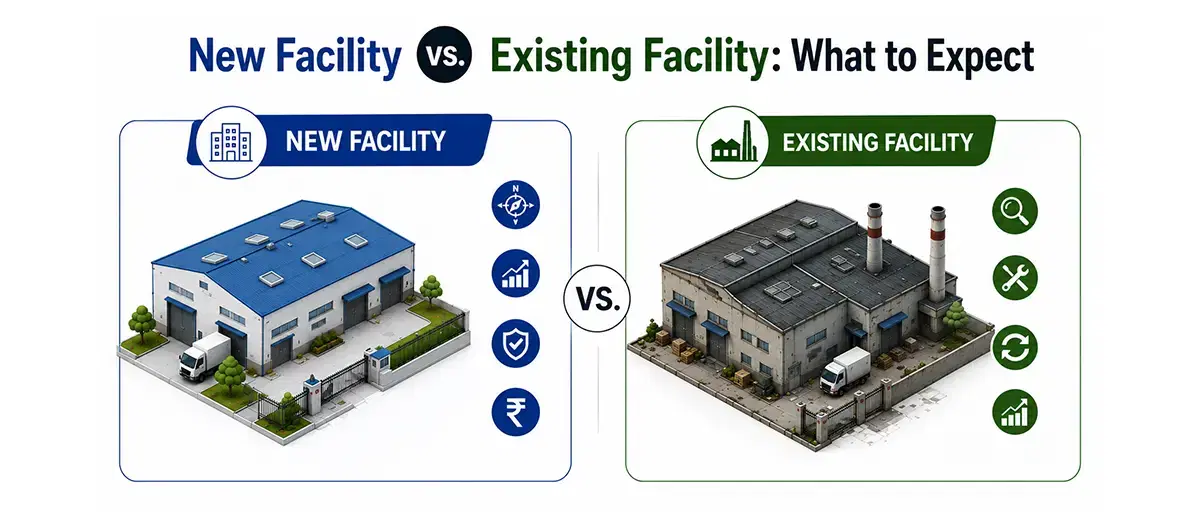
For new builds, Vastu integration at the design stage is seamless. Direction of entry, placement of zones, machine layout, drainage and electrical positioning can all be aligned from the start. The cost is effectively zero, it's just planning intelligence applied early.
For existing factories, the correction process focuses on what can be moved without structural changes first. In most factories, 60-70% of meaningful corrections fall into this category. Machines can be repositioned. Storage can be relocated. Office cabins can be moved. Entrance treatments can be added. Structural interventions, such as shifting walls and relocating the main gate, are recommended only when the operational problem is severe, and the directional issue is clearly the root cause. These are discussed with full cost transparency.
A Note on the Centre of the Floor
This deserves its own section because it's so commonly violated and so consistently problematic.
Factories in Chandni Chowk, Okhla, and other dense industrial pockets of Delhi tend to be built in tight plots. Space pressure leads to placing storage racks, support pillars, or even small workstations in the geometric centre of the production hall. The Brahmasthan, the central zone, is the energetic heart of the space. Blocking it creates a kind of systemic pressure that shows up as unexplained production stoppages, communication breakdowns between departments and a general sense that nothing flows easily. The fix is simply to clear it. Move what's there to the perimeter. The change is usually felt quickly.
When to Call a Vastu Consultant for Your Factory
If you recognise more than two of these patterns in your facility, it's worth a formal consultation:
- Repeated equipment breakdowns on specific machines despite regular maintenance
- High worker absenteeism or turnover without a clear HR explanation
- Production targets consistently falling short by similar margins each quarter
- Financial pressure that doesn't match order volume
- New machinery underperforming against manufacturer specifications
- A persistent sense among staff that the space feels heavy or tiring
None of these are automatically Vastu problem. But when conventional audits, technical, HR and financial, don't produce satisfying explanations, the spatial logic of your facility deserves examination.
Conclusion
Vastu for factory layout is not a replacement for good engineering, sound management, or modern production planning. It's an additional layer of intelligence, one that treats your physical space as an active participant in your operations rather than a neutral container. The factories that integrate directional planning tend to have fewer unexplained problems, smoother material flow and operational environments that sustain performance over time.
That's not a claim built on belief. It's a pattern observed across enough North Indian manufacturing units to take seriously.
If you are building, expanding or troubleshooting your facility, speak to Layered Vastu's industrial consultation team. The conversation starts with your floor plan and a compass reading and usually surfaces answers that have been hiding in your layout for years. Explore our services at layeredvastu.com
Why Choosing Us
100% Certified
Authentic Documents, Showcasing Legality100% Customer-Centric
Customization As Per Client's RequirementLifetime Assistance
Offering Services For The Entire LifespanFAQS
Directional planning affects air flow, light orientation, worker ergonomics, and the movement logic of materials through your facility. When these are aligned with Vastu principles, operational friction tends to reduce. It won't replace process engineering, but it addresses spatial factors that process engineers typically don't audit.
Most corrections in existing facilities don't require structural changes. Equipment repositioning, storage relocation, office cabin placement and entrance treatment can produce meaningful results without breaking walls or stopping production.
North and east-facing entrances are generally most productive for industrial use. South-facing entrances require specific corrections, but can work. The entrance direction sets the orientation grid for everything inside, so it's the first thing an industrial Vastu consultant will assess.
Home Vastu prioritises peace, rest and family harmony. Factory Vastu prioritises flow, output and mechanical stability. The directional grid is the same, but what belongs in each zone is completely different. Applying residential Vastu logic to a factory almost always produces poor results.
A full site consultation, compass reading, floor plan overlay, zone assessment, and correction report typically takes one site visit plus a few days to produce the phased correction document. For larger multi-building complexes, it may require two visits.

Send Your Query
Related Posts

How Vastu & Numerology in Logo Design Propel Your Business Forward
Unlock your business potential by incorporating Vastu and Numerology i...Read More
10 Vastu Shastra Tips to Completely Transform Your Home
Implementing Vastu principles can improve your home and enhance your o...Read More
Wristwatch Analysis: How Your Watch Influences Your Life
Wristwatch analysis explores how a watch's type, color, shape, and siz...Read More
Optimizing Small Living Space with Vastu Principles
Ancient Indian architecture offers techniques for creating harmony and...Read More
Harnessing Prosperity: Mastering Wealth Through Vastu Shastra
Vastu Shastra, an ancient architectural philosophy, can align living s...Read More.jpg&w=750&q=75)
Mastering Company Logo Vastu for Enhanced Business Success
A Vastu-aligned logo is a conduit for success, resonating with physica...Read More
Vastu for Work Desk The Right Sitting Direction for Focus, Income, and Authority
Find the best Vastu direction for your work desk to boost concentratio...Read More
वास्तु शास्त्र के अनुसार लोगो डिजाइन
व्यवसाय के लिए सर्वोत्तम लोगो डिज़ाइन करने के लिए, आप वास्तुशास्त्र की...Read More
Vastu Tips For BP Control: Time to Shift Your Burner!
Hey there! It's a common thing, you know, to have blood pressure probl...Read More
Logo Design As Per Vastu Shastra
Logo design as per vastu must be directed in the upward direction whic...Read More.jpg&w=750&q=75)
Factory Vastu: A Blueprint for Success
By incorporating Vastu principles into your factory's design and layou...Read More
Vastu Shastra Myths: What Classical Texts Actually Say
Vastu Shastra myths, debunked. See what classical texts like Brihat Sa...Read More
Vastu For Rental Properties: Enhancing Well-Being and Success
Living in a rented property doesn't mean you have to forgo the benefit...Read More
Enhancing Your Child's Education Through Mahavastu Principles
As parents, creating an optimal learning environment for your child is...Read More
Logo Design And Branding As Per Vastu Principles
Incorporating Vastu principles into logo design and branding can be a ...Read More
Vastu for North-East Facing House: Classical Rules & Room Guide 2026
A north-east facing house is considered the most auspicious in Vastu S...Read More
Creating A Vastu-Compliant Garden : Tips For Natural Harmony
A Vastu-compliant garden is not only visually appealing but also a sou...Read More
Vastu in the Kitchen : Energizing Your Cooking Space
Cooking in the kitchen is more than simply a means to an end; it's the...Read More
Vastu Compass And Directions : How to Find the Facing of Your House
Vastu Shastra, the ancient Indian science of architecture, lays great ...Read More
Creating an Optimal Floor Plan for Residence Based On Modern Vastu Principles
Designing an optimal floor plan for a residence based on modern Vastu ...Read More
Unveiling The Path To Harmony : Common Vastu Mistakes To Avoid
In our pursuit of a harmonious and prosperous life, it is essential to...Read More
Decoding The Path To Harmony : Choosing A Proficient Vastu Consultant
Choosing a qualified and experienced Vastu consultant is a vital step ...Read More
Unleashing Abundance : Harnessing Vastu for Wealth and Prosperity
Incorporating the principles of Vastu Shastra into our living and work...Read More
Vastu for Good Health: 12 Tips That Actually Make a Difference
Struggling with low energy, poor sleep, or frequent illness? These 12 ...Read More
Enhancing Relationships with Vastu Shastra
In the journey of life, the quality of our relationships is a determin...Read More
Name Correction in Numerology: Solution to Many Life Problems
Name is everything and this is the reason why people focus on having a...Read More
Produce Quality, Earn More: Follow Vastu Tips for Factory
Vastu Shastra is all about design and planning that helps in building ...Read More
Vastu Tips for Commercial Space: Follow And Earn More Profits
Vastu is an imperative part of commercial space as it can affect the w...Read More
Vastu Colors for Home: What Each Direction Actually Needs
Which Vastu color belongs in which room, and why direction matters as ...Read More.jpg&w=750&q=75)